Managing produced water requires navigating high-volume waste streams, complex hydrocarbon-and-solid emulsions, and increasingly stringent discharge regulations that traditional multi-stage treatment trains struggle to handle efficiently.
For plant operators and process engineers, fluctuating influent quality and high capital intensity continue to drive up operational costs. This article examines the limitations of conventional separation technologies and evaluates how single-stage ceramic ultrafiltration systems provide a more resilient, compact solution for industrial water reuse and disposal.
Conventional Produced Water treatment processes typically include Oil removal, TSS removal, TDS reduction, softening (hardness removal), and the elimination of toxic substances like heavy metals, Naturally Occurring Radioactive Material (NORM), Hydrocarbons, and other harmful compounds. Among these, deoiling, a process focused on removing oil and suspended solids, is typically the initial step. Traditional deoiling technologies include API separators, CPI separators, Induced Gas Flotation (IGF), Dissolved Gas Flotation (DGF), Hydro-cyclones, and Oil removal filters for polishing.
Despite their widespread use, these traditional technologies face several limitations that can hinder effective produced water treatment. The challenges are becoming more apparent as water composition varies and contaminants become more complex.
Limitations of Conventional Treatment Technologies
Conventional methods are increasingly being challenged by the complexities of Produced Water, leading to significant limitations in their effectiveness.
- Emulsified Oil: Emulsions such as straight, reverse and double emulsions are difficult to separate from the water using conventional oil separation technologies without using expensive specialty chemicals and/ or thermal treatment.
- Fine Suspended Particles: Small particles and colloids resist removal using conventional methods.
- Variable Water Quality: Fluctuations in oil concentration, particle size, salinity, pH, viscosity, and temperature impact system performance.
- Multiple Stage Treatment: Traditional deoiling systems often require multiple stages due to the relatively low efficiency of oil and solids removal in each stage. This adds to the capital and labour cost.
ALSYS Ceramic Ultrafiltration (CUF) Systems: Engineered for Efficiency & Reliability
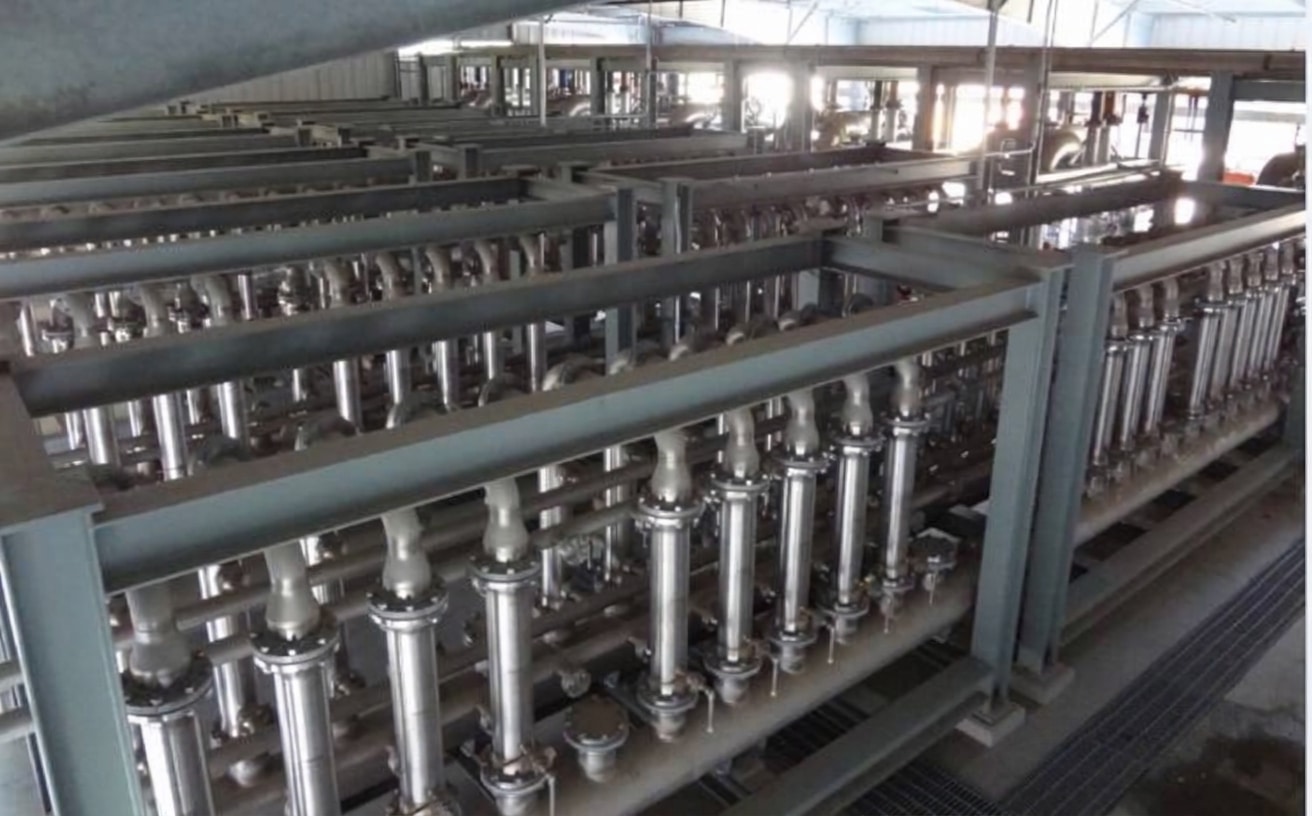
Our Ceramic Membrane System offers a superior alternative to traditional deoiling systems, providing distinct advantages:
- Enhanced Water Quality: Ceramic membranes act as a highly effective physical barrier, removing oil droplets and fine particles down to sizes ranging from 5nm to 0.2micron without chemical addition.
- Simplified Process: An efficient alternative that combines high removal effciency for both oil and solids into a single stage.
- Consistent Performance:Highly effective at removing oil and solids, even from stable and complex emulsions, providing consistant permeate quality even with fluctuating influent water quality. Perform effectively in the most challenging conditions including upset scenarios with extreme TSS and high oil concentrations.
- Robustness: Ideal for demanding and complex operational conditions, including high temperatures, highly aggressive chemicals, extreme pH levels, and environments with high corrosion or abrasion. Chemical resilience allows Ceramic Membranes to resist aggressive cleaning procedures without degradation, ensuring sustained high flux rates over extended periods.
- Compact & Flexible: Smaller footprint compared to conventional systems. Offers adaptability for various operation setups functioning effectively as either a centralized treatment facility or a decentralized, mobile system.

The ALSYS Advantage: From Manufacturing to Engineering Execution
ALSYS delivers advanced ceramic membrane solutions through a fully integrated value chain. Because we engineer both the membranes and the complete skid systems, we support clients across every stage of the project lifecycle. Our comprehensive scope of supply includes:
- Consulting and feasibility assessments
- Pilot testing
- Proprietary membrane and equipment manufacturing and supply
- Engineering, Procurement, and Construction (EPC) services
- System troubleshooting and long-term operational support
Backed by extensive process design expertise, we deliver turnkey solutions designed to overcome conventional limitations, lower total cost of ownership (TCO), and ensure long-term regulatory compliance.
Engineered to Overcome Conventional Limitations
Our ceramic membrane systems provide a reliable, high-efficiency alternative to traditional produced water technologies. By combining robust physical separation with operational simplicity, we help operators handle variable water quality, complex emulsions, and tight space constraints. Backed by extensive process design expertise, we deliver turnkey solutions designed for long-term operational success and compliance.
Upgrade your Produced Water reliability. Connect with our team today to explore pilot deployment or request a technical consultation.