
Distributed Hydrogen Generation
Hydrogen demand is growing, but storage and transport create logistical challenges. Ammonia offers an alternative hydrogen storage option, containing 17.6% hydrogen by weight at moderate pressure, with established distribution infrastructure. Ammonia is also considered a ‘fuel of the future.
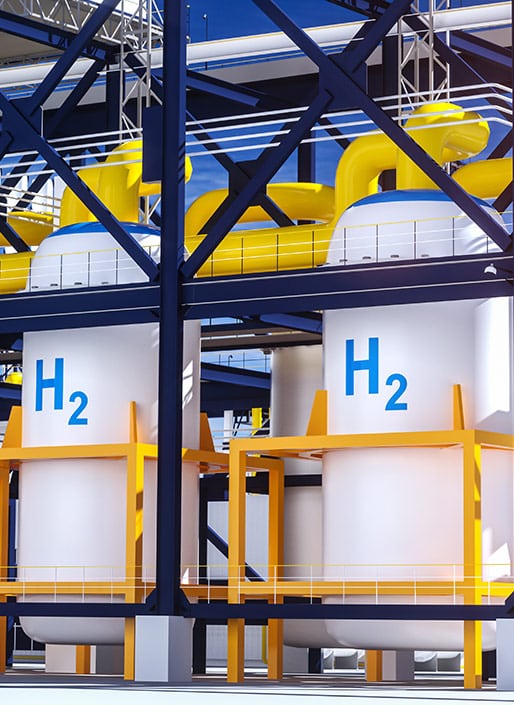
ALSYS’ innovative catalysts provide ammonia decomposition systems that generate hydrogen on demand from ammonia feedstock for facilities that need distributed hydrogen generation without the complexity of steam methane reforming or the logistics of compressed hydrogen delivery.
With experience in European industrial hydrogen applications, ALSYS delivers catalyst solutions from feasibility testing through commissioning.
The ALSYS Advantage
ALSYS is developing unique, patented catalyst solutions that offer high activity and durability across a wide temperature and pressure window.
Hydrogen from Ammonia Technology
ALSYS ammonia cracking catalysts are designed for reliable hydrogen generation across industrial applications. Catalyst formulations and system designs handle conditions from small-scale intermittent operation to continuous industrial-scale production, where hydrogen-delivery logistics or the complexity of steam-methane reforming make ammonia cracking advantageous.
High Conversion Efficiency
Catalyst formulations achieving greater than 99% ammonia conversion, generating high-purity hydrogen suitable for most industrial applications.
Moderate Operating Temperatures
Ammonia cracking at 450-600°C reduces energy input and enables the use of standard construction materials, unlike higher-temperature processes.
Scalable System Design
Complete ammonia cracking systems from small-scale (kg/hr) to industrial-scale (tons/day), matching hydrogen demand profiles.
Catalytic Systems for On-Demand Hydrogen Generation
ALSYS ammonia cracking catalysts enable hydrogen production from ammonia across industrial manufacturing, energy storage, and emerging hydrogen applications.
Overview
Ammonia cracking converts ammonia (NH₃) to hydrogen and nitrogen at 450-600°C over a catalyst. The reaction is endothermic, requiring heat input. The process is more straightforward than steam methane reforming, with no CO or CO₂ in the product gas.
Applications range from kg/hr on the laboratory and small manufacturing scale to tons/day for large industrial users. The technology makes sense when:
- Compressed hydrogen logistics are challenging or expensive
- Hydrogen demand varies, making pipeline connection uneconomical
- The steam methane reforming scale or complexity is not justified
- Ammonia delivery infrastructure exists, but hydrogen infrastructure does not
Hydrogen cost from ammonia depends on delivered ammonia cost, cracking system capital and operating cost, and hydrogen purity requirements. For moderate to large users (greater than 100 kg/day), the total hydrogen cost from ammonia is typically lower than that of delivered compressed hydrogen.
ALSYS’ Track Record
Ammonia cracking systems convert ammonia to hydrogen and nitrogen at 450-600°C, using catalyst formulations that achieve greater than 99% conversion, operate continuously, match hydrogen demand with automated controls, and produce hydrogen with less than 1% residual ammonia and nitrogen, suitable for most industrial applications.
Systems supplied for metals processing (heat treatment, brazing, sintering), electronics manufacturing (protective atmospheres, semiconductor processing), chemical production (hydrogenation, specialty chemicals), and fuel cell applications (stationary fuel cells for backup power and distributed generation).
Hydrogen purification to greater than 99.99% via PSA or membrane separation is available when high-purity hydrogen is required for fuel cells or other demanding applications. For many industrial applications, direct cracking output (greater than 99% hydrogen, less than 1% ammonia, and less than 1% nitrogen) is sufficient.
Safety systems include ammonia detection, automated shutdown on detection, proper ventilation, and equipment rated for hydrogen service. ALSYS designs systems meeting applicable codes and standards for both ammonia and hydrogen handling.
Related Solutions
- Ammonia cracking catalyst for high-conversion hydrogen generation
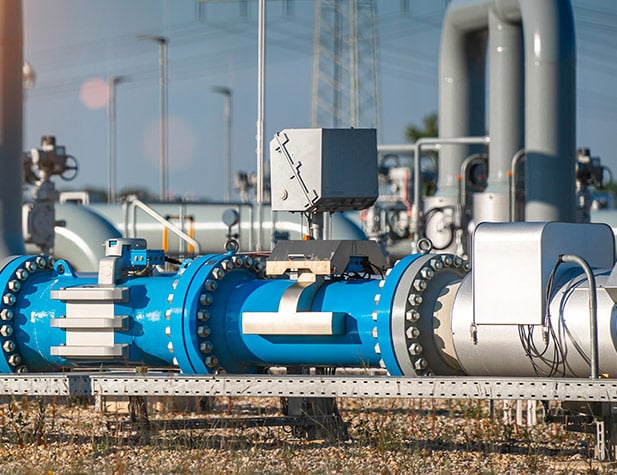
- Complete system design including ammonia storage, vaporization, cracking reactor, and hydrogen distribution, along with hydrogen purification systems and integrated safety systems with hazardous area compliance.
Related Markets
Questions About Hydrogen from Ammonia
Here, we answer common questions about ALSYS’ hydrogen-from-ammonia technology. Learn about the cost-effectiveness, purity, safety, and performance of our cracking systems across various industrial applications.
Ammonia contains 17.6% hydrogen by weight. Delivered ammonia costs significantly less per kg of contained hydrogen than delivered compressed hydrogen cylinders or tube trailers.
Adding cracking system capital and operating costs (energy for cracking, catalyst replacement, maintenance), the total hydrogen cost from ammonia is typically lower than that of delivered compressed hydrogen for moderate to large users (greater than 100 kg/day hydrogen).
For small users (less than 50 kg/day), delivered hydrogen cylinders may be more economical, thereby avoiding the investment in a cracking system. For very large users (greater than 1000 kg/day), pipeline hydrogen or on-site steam methane reforming may be more economical if infrastructure is available.
Crossover depends on the delivered hydrogen and ammonia costs, the cracking system scale, and the hydrogen purity requirements. Economic analysis with site-specific costs determines optimal approach.
Direct cracking output contains:
- Greater than 99% hydrogen
- Less than 1% unreacted ammonia (typically 0.1-0.5%)
- Balance nitrogen
For many industrial applications (metals heat treatment, chemical hydrogenation, industrial atmospheres), this purity is sufficient without additional purification.
For applications requiring higher purity (fuel cells typically require greater than 99.99% hydrogen, semiconductor processing may require greater than 99.999%), purification via:
- Pressure swing adsorption (PSA): Produces greater than 99.99% hydrogen and ammonia removal in the adsorbent.
- Membrane separation: Produces greater than 99.9% hydrogen with moderate capital cost
Purification adds capital and operating costs but enables ammonia cracking for high-purity applications.
Ammonia cracking systems handle two hazardous materials (ammonia and hydrogen), requiring appropriate safety measures:
Ammonia safety:
- Ammonia detection and monitoring in the equipment area
- Automated shutdown on ammonia detection
- Proper ventilation prevents ammonia accumulation
- Personal protective equipment for operators
- Emergency response procedures for ammonia release
Hydrogen safety:
- Hydrogen detection and monitoring
- Equipment rated for hydrogen service (appropriate materials, explosion-proof electrical)
- Proper ventilation prevents hydrogen accumulation
- Bonding and grounding for static electricity
- Appropriate fire protection
ALSYS designs systems meeting applicable codes. Safety systems integrate ammonia and hydrogen detection with automated shutdown to prevent unsafe conditions.
Ammonia and hydrogen are industrial chemicals that have been used safely for decades. Proper system design and operator training enable safe operation.
Response depends on system design:
- Continuous base load: Systems sized for continuous production operate steadily. Hydrogen storage (compressed or liquid) buffers demand fluctuations.
- Demand-following: Controls adjust the cracking rate to match hydrogen demand. Response time is minutes for temperature control and flow adjustment.
- Intermittent operation: Systems start up and shut down, matching demand. Startup time is 1-2 hours for temperature stabilization.
For applications with highly variable hydrogen demand (fuel cells for backup power, batch manufacturing), hydrogen storage provides a buffer. For steady hydrogen demand (continuous manufacturing), systems operate at steady state.
Find the Right Solution for Your Hydrogen Production Requirements
Discuss hydrogen from ammonia for your industrial application.