
Delivering Predictable Performance in Complex Operating Conditions
Industrial operators face tightening emissions limits, increasing fuel variability, and greater scrutiny over combustion efficiency and air-quality compliance. Catalysts now play a critical role in maintaining consistency across equipment fleets, protecting downstream assets, and ensuring stable operation even as process conditions fluctuate.
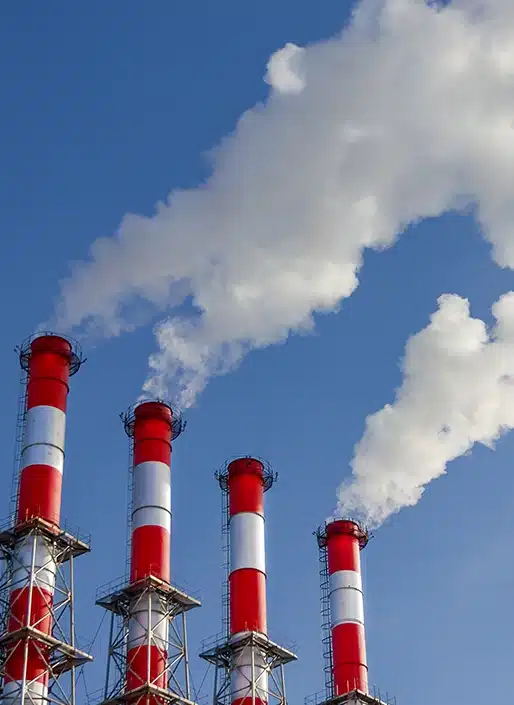
Thermal, chemical, and particulate stresses routinely push conventional catalyst formulations beyond their performance window. Systems designed without adequate material stability or tolerance to poisoning events face reduced service life, higher replacement frequency, and unpredictable compliance risks.
Across refining, petrochemical, energy, and specialty chemical environments, operators require catalytic materials that deliver reliable conversion efficiency, long service life, and resistance to real-world operating contaminants. And thus complying with the most severe emission limits regulation, ALSYS supports these needs with selective NOx reduction catalysts (DeNOx-SCR), VOC oxidation, and specialty catalyst technologies, including greenhouse gas abatement catalysts, such as nitrous oxide (N₂O) or methane (CH₄). These technologies are engineered to perform under demanding thermal loads, variable exhaust profiles, and aggressive process conditions.
Performance Advantages That Matter Most
ALSYS catalysts are developed to maintain conversion performance and structural integrity under fluctuating temperatures, contaminants, and operating cycles. With engineered formulations and controlled manufacturing, these systems help operators meet regulatory targets, stabilize process efficiency, and extend equipment life. Working in close collaboration with clients to jointly define the optimal conditions for the use of catalysts

High Conversion Stability Under Variable Conditions
Formulated to maintain the regulated species(NOx, VOC, N₂O) reduction across changing temperatures, feed compositions, and operational loads.
Low Sensitivity to Contaminants and Fouling
Materials designed to resist poisoning from sulfur, hydrocarbons, and particulates common in industrial exhaust streams.

Long Operating Life With Predictable Maintenance Cycles
Catalyst durability reduces changeout frequency and supports reliable emissions compliance over extended campaigns.
Flexible Integration Across Equipment Fleets
Available for heaters, boilers, furnaces, reactors, and modular skid systems to support both brownfield and greenfield applications.

Decades of Catalyst Development Experience
ALSYS brings long-term expertise in emissions chemistry, catalyst formulation, and high-temperature material behavior.
Explore Our Catalyst Technologies
ALSYS delivers a portfolio of catalyst solutions engineered for NOx reduction including N₂O, VOC control, and high-efficiency reaction pathways. These technologies support operational reliability, compliance confidence, and long-term performance across industrial, refining, energy, and chemical facilities.
Conversion Stability for NOx Reduction Requirements
SCR catalysts deliver high-efficiency NOx removal across a wide temperature range and varying exhaust conditions. ALSYS formulations are engineered for strong ammonia, NOx reaction performance, stable activity under thermal cycling, and resistance to poisons such as sulfur, alkali metals, and particulates. Optimized catalyst geometry and active site distribution minimize ammonia slip while maintaining high NOx conversion, ensuring facilities meet both NOx limits and ammonia emission standards. These systems help operators maintain regulatory compliance even when fuel quality or unit loading shifts during operation.
As emissions standards become more stringent, SCR solutions must demonstrate consistent performance over longer campaigns. ALSYS supports these requirements with competitive catalysts designed for extended operating life, controlled geometries, and ease of integration into existing reactor housings. Facilities benefit from predictable conversion rates, reduced ammonia slip, and lower lifecycle cost.
ALSYS Track Record
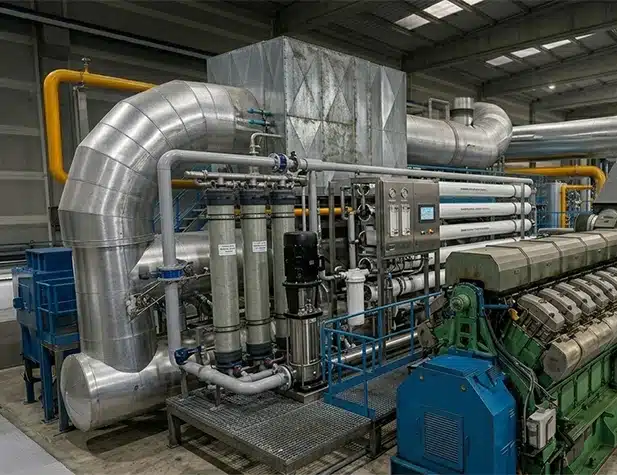
ALSYS has a proven track record of designing SCR catalysts for heaters, boilers, furnaces, and industrial combustion units. The company’s formulations are engineered with controlled-pore structures and high-temperature materials that maintain activity through repeated thermal cycles. These catalysts exhibit strong tolerance to SO₂/SO₃ environments, minimize deactivation from particulate deposition, and deliver stable conversion profiles under real operating conditions.
Engineers support clients through modeling, sizing, and lifecycle planning to help facilities optimize ammonia injection, manage pressure drop, and maintain long-term catalyst health. ALSYS’ integrated approach ensures the SCR system delivers reliable emissions performance while reducing unplanned outages and changeout frequency.
Explore More
Learn where SCR catalysts provide the strongest value for combustion-based operations.
Reliable Hydrocarbon and Organic Vapor Conversion
VOC oxidation catalysts provide a controlled pathway for converting hydrocarbons, solvents, and organic vapors into CO₂ and water. ALSYS oxidation catalysts are developed for high activity, fast light-off behavior, and stable performance across fluctuating exhaust temperatures. These systems help operators minimize emissions from process heaters, storage operations, thermal oxidizers, and chemical units.
With increasing regulatory pressure and variable feed profiles, oxidation catalysts must balance durability with strong reaction selectivity. ALSYS formulations are engineered for contaminant resistance, reduced deactivation rates, and long-term operation under challenging organic vapor environments.
ALSYS’ Track Record
ALSYS oxidation catalysts use engineered precious-metal or base-metal formulations supported on thermally robust substrates. These materials maintain catalytic activity even in the presence of variable hydrocarbons, oxygen levels, or temperature spikes common in industrial exhaust systems. The combination of controlled dispersion and optimized support geometry helps maintain low light-off temperatures and stable long-term performance.
ALSYS supports customers with application guidance, loading strategies, and reactor configuration design. This ensures oxidation catalysts integrate effectively into existing units while delivering predictable emissions control, reduced pressure drop, and extended operating life across a range of VOC sources.
Explore More
See where oxidation catalysts help stabilize emissions from chemical and industrial operations.
Optimized Flow Distribution and Catalyst Protection
Catalyst grading materials provide essential support for SCR and oxidation systems, ensuring uniform flow distribution, protecting active catalyst layers from particulate deposition, and minimizing pressure drop across reactor beds. ALSYS grading layers are engineered for thermal stability, mechanical strength, and compatibility with existing reactor geometries.
Properly designed grading systems extend catalyst life by reducing localized fouling, preventing channeling, and maintaining consistent ammonia distribution in SCR applications. This results in improved conversion efficiency, reduced ammonia slip, and lower maintenance frequency.
ALSYS’ Track Record
ALSYS provides engineered grading materials sized for specific reactor configurations, exhaust velocities, and particulate loading conditions. These materials are designed to withstand thermal cycling, resist erosion from particulate impact, and maintain structural integrity throughout the catalyst service life.
Engineering support includes grading layer design, installation guidance, and performance modeling to ensure optimal catalyst bed protection and conversion performance across varying operating conditions.
Explore More
Learn where grading materials strengthen catalyst system performance and longevity.
Integrated Systems for Reliable Emissions and Reaction Performance
ALSYS catalyst systems combine engineered housings, flow control, and material selection to support stable NOx reduction, VOC oxidation, and specialty catalytic reactions. These systems are designed to manage variable exhaust temperatures, contaminant loads, and operational cycling while maintaining predictable conversion efficiency.
With modular designs and application-specific engineering, ALSYS supports customers who require reliable performance without extensive in-house design resources. Systems can be configured for industrial furnaces, boilers, heater bays, oxidizers, or specialty chemical processes.
ALSYS’ Track Record
ALSYS brings decades of experience integrating catalysts into complete system designs that maintain activity, control pressure drop, and mitigate poisoning risks. Each installation is engineered to be compatible with the upstream process, meet targeted conversion requirements, and maintain long-term reliability under thermal and chemical stress.
From feasibility evaluation to commissioning and lifecycle support, ALSYS ensures catalyst systems deliver stable operation and measurable performance improvements across industrial facilities.
Explore More
Learn where catalyst systems create measurable value in demanding environments.
Commonly Asked Questions About Catalysts
Operators across emissions control, synthetic fuel production, chemical processing, and high-temperature gas treatment often face uncertainty around catalyst selection, lifecycle, regeneration, and system integration. These FAQs provide practical guidance on how ALSYS and Enercat catalysts perform under industrial conditions, how they respond to deactivation mechanisms, and what users can expect from full-service support throughout the catalyst’s operational life.
SCR catalysts target NOx removal by promoting reactions between NOx and ammonia or urea across a controlled temperature window. These catalysts maintain activity under variable combustion conditions and help operators meet stringent NOx limits. Oxidation catalysts convert VOCs and hydrocarbons into CO₂ and water, offering a stable pathway for reducing organic emissions from heaters, oxidizers, and process units.
- SCR provides high-efficiency NOx reduction
- Oxidation catalysts target VOCs and organic vapors
- Both rely on engineered formulations to resist contaminants
- ALSYS supports selection based on exhaust chemistry, temperature, and compliance goals
By combining SCR and oxidation technologies, ALSYS helps operators maintain reliable compliance across mixed emissions profiles.
Catalyst longevity depends on exhaust composition, poisoning susceptibility, particulate loading, and thermal cycling. Sulfur, alkali metals, and heavy hydrocarbons can deactivate catalyst sites, while temperature swings may accelerate structural fatigue. ALSYS designs catalysts to tolerate real-world contaminants and maintain stable performance under variable operating conditions.
- Formulations resist sulfur, hydrocarbons, and fouling
- Controlled supports maintain dispersion and surface area
- Thermal stability reduces deactivation during cycling
- ALSYS engineers optimize operating windows and cleaning practices
With application-specific support, operators achieve more predictable catalyst life and lower total cost of ownership.
ALSYS catalysts are engineered for compatibility with common reactor geometries, heater bays, boiler housings, and thermal oxidizers. Modular blocks and loading strategies allow operators to upgrade performance without redesigning major equipment.
- Modular geometries fit brownfield layouts
- Pressure-drop and temperature criteria guide material selection
- Catalysts stabilize emissions and reduce downstream load
- ALSYS supports modeling, installation, and lifecycle planning
This ensures catalyst integration improves compliance and reliability rather than complicating operations.
Specialty catalysts are beneficial when separation, reaction pathways, or product purity requirements exceed the capabilities of standard SCR or oxidation systems. These formulations support targeted reactions in specialty chemicals, intermediates production, and advanced materials workflows.
- Used for selective chemical transformations
- Support pilot and production-scale specialty workflows
- Operate under tailored reaction and temperature ranges
- ALSYS designs materials around specific process conditions
Specialty catalysts provide operators with custom performance where standard emissions catalysts cannot meet the application’s needs.
Find The Right Catalyst For Your Needs
Explore catalytic options aligned with your target reactions, emissions goals, and process requirements.