
Reliable Solutions for Harsh, Corrosive, and High-Fouling Marine Environments
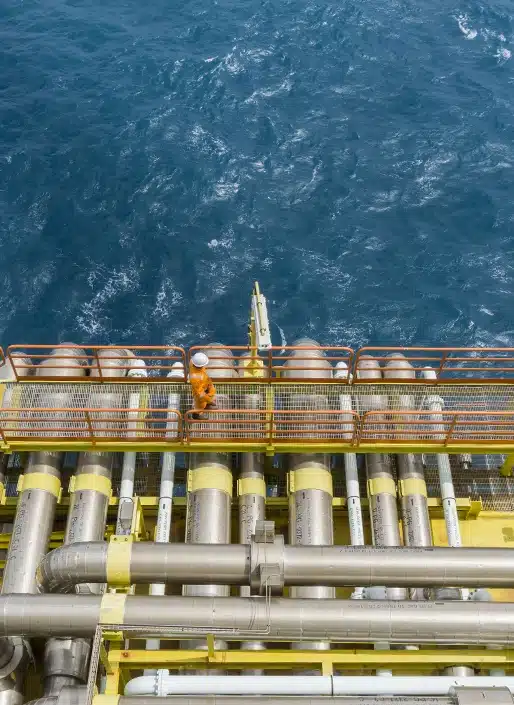
Marine operations demand equipment capable of handling seawater, oils, surfactants, suspended solids, organic contaminants, and corrosive environments—often with minimal operator oversight. ALSYS membrane systems provide reliable clarification, oil removal, and solids separation. Catalyst systems support air emission compliance for combustion units and industrial marine facilities.
Our technologies are engineered for durability, stability, and long operating life under fluctuating pressures, temperatures, and chemical conditions typical of marine settings.
ALSYS Expertise at a Glance
ALSYS is a proven leader in providing specialized solutions for the marine and offshore industries.

Reliable water and wastewater treatment
Membranes support oily water treatment, bilge water management, and solids removal for marine industrial operations.

Durability in corrosive environments
Ceramic membranes offer chemical resistance to salts, solvents, surfactants, and cleaning agents.

Emissions control for marine energy systems
Catalyst systems reduce NOx, VOCs, and other pollutants from combustion units and onboard equipment.
Support for offshore chemical processes
Pervaporation and membrane separation enable efficient solvent handling, dehydration, and process stabilization.
Flexible, compact system design
Skid-mounted membrane and catalyst systems integrate easily into constrained marine and offshore footprints.
Applications in Marine and Offshore
Our specialized solutions provide robust performance and reliability for the demanding conditions found in marine, offshore, and shipbuilding environments.
Overview
Marine wastewater streams, generated from various vessel operations such as bilge water, ballast water, and greywater, present a complex challenge for environmental compliance. These streams are characterized by a heterogeneous composition, typically containing stabilized oil-in-water emulsions, various synthetic surfactants and cleaning agents, suspended particulates (including rust, soot, and biological matter), and a range of dissolved and dispersed organic compounds. Consistent and effective removal of these contaminants is mandatory to meet increasingly stringent international and national discharge regulations, protecting sensitive marine ecosystems from pollution.
Membrane technology offers a highly reliable and controlled approach to separation and purification in this demanding environment. Unlike conventional separation methods, membranes provide a physical barrier capable of precise, size-exclusion-based separation, ensuring high-quality effluent even when faced with significant variations in the feed water characteristics, flow rates, and pollutant concentrations. This controlled separation under variable feed conditions makes membranes an ideal, robust solution for shipboard wastewater treatment applications.
ALSYS’ Track Record
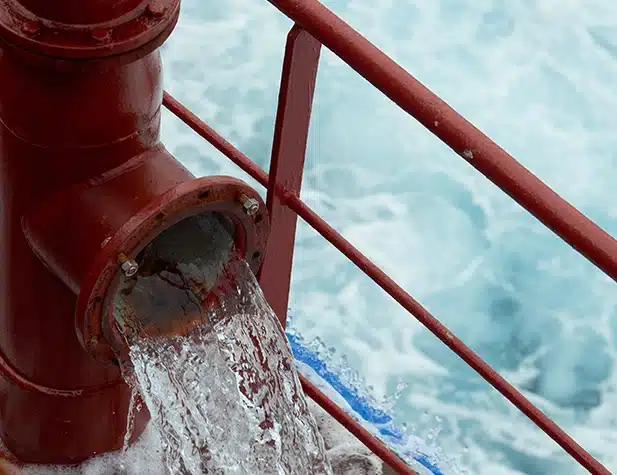
Kleansep ceramic membranes have been applied for oily water separation in marine and offshore systems, providing long-term stability and predictable flux under challenging conditions.
Related Solutions
Related Applications
Overview
Seawater-based utility systems necessitate robust, continuous filtration due to unique operational challenges posed by contaminants. These contaminants fall into three main categories: suspended solids, biological loading (biofouling), and corrosion-related particulates. Effective management requires physically removing solids and complementing this with antifouling measures like chlorination for biological matter.
A comprehensive filtration strategy must be tailored to specific system parameters, including flow rate, temperature, and the particle size tolerance of the most sensitive equipment, such as heat exchangers. Equipment utilized spans from coarse intake screens to very fine cartridge filters. Ultimately, a strategic approach to filtration is critical not just as a safeguard, but to maintain the operational integrity and overall lifecycle cost-effectiveness of seawater-reliant plants.
ALSYS’ Track Record
Ceramic microfiltration and Persep ultrafiltration systems support clarification of marine utility water streams for offshore platforms and coastal industrial plants. Ceramic microfiltration and Persep ultrafiltration systems support clarification of marine utility water streams for offshore platforms and coastal industrial plants. These advanced filtration technologies are crucial for removing suspended solids, bacteria, and other contaminants from raw seawater. By providing high-quality filtered water, these systems ensure the efficient and reliable operation of critical marine utilities, such as cooling, boiler feed, and process water.
Offshore platforms rely heavily on clean utility water for various operations, making robust filtration essential. Similarly, coastal industrial plants utilize these systems to protect downstream equipment from fouling and corrosion caused by marine-based impurities. The implementation of microfiltration and ultrafiltration significantly reduces maintenance costs and extends the lifespan of vital machinery in these challenging marine environments.

Related Solutions
Related Applications
Overview
Offshore production systems require efficient solvent handling for dehydration, chemical intermediates, and specialized processes. The successful operation of these systems hinges on the precise management of solvents to maintain product quality and operational efficiency. Furthermore, proper solvent regeneration and recycling are crucial for minimizing environmental impact and reducing operating costs associated with solvent replacement.
These specialized processes often involve the use of amine-based solvents for gas sweetening and glycols for hydrocarbon dehydration. The choice of solvent is dictated by the specific contaminants and the necessary purity levels of the final product. Reliable and robust solvent handling equipment, including pumps, heat exchangers, and separators, is therefore essential for continuous and safe offshore operations.
ALSYS’ Track Record
Hybsi pervaporation membranes have supported solvent dehydration and azeotrope breaking for offshore and coastal chemical operations. These specialized membranes offer a highly efficient and energy-saving alternative to traditional distillation methods in the challenging marine environment. Their application ensures high purity solvents, critical for various downstream processes in these remote locations.
The durability and compactness of Hybsi membranes make them ideal for deployment on marine platforms and vessels where space is limited and conditions are harsh. By facilitating continuous and reliable solvent separation, they contribute significantly to the operational efficiency and sustainability of offshore production facilities. This technology represents a crucial advancement in making chemical processing at sea more viable and environmentally responsible.

Related Solutions
Related Applications
Overview
Marine engines and onboard combustion systems generate nitrogen oxides (NOx), volatile organic compounds (VOCs), and various other pollutants that necessitate stringent emissions control measures. These emissions contribute significantly to air pollution, particularly in coastal areas and major shipping lanes, impacting both human health and local ecosystems. Regulatory bodies worldwide are continuously tightening limits on these substances, driving the need for advanced abatement technologies.
Addressing these challenges requires the implementation of sophisticated after-treatment systems, such as Selective Catalytic Reduction (SCR) for NOx and exhaust gas scrubbers for sulfur oxides (SOx). The development of cleaner-burning fuels and the transition to alternative power sources, like LNG or electricity, also play a crucial role in reducing the overall environmental footprint of the maritime industry. Compliance with current and future IMO (International Maritime Organization) regulations is essential for continued global shipping operations.
ALSYS’ Track Record
SCR catalysts and VOC oxidation catalysts are vital components in modern marine industrial facilities. These technologies are specifically employed to manage harmful emissions, ensuring compliance with strict international environmental regulations for both stationary and mobile offshore operations.
Furthermore, these catalyst systems play a critical role in supporting offshore power generation units. By effectively reducing nitrogen oxides (NOx) through Selective Catalytic Reduction (SCR) and oxidizing volatile organic compounds (VOCs), they help maintain cleaner air quality and minimize the environmental impact of energy production at sea.

Related Solutions
Related Applications
Technical Resources for Marine Applications
Explore resources detailing the value ALSYS can bring to your marine operations.
Commonly Asked Questions About Marine Applications
Below are answers to common questions regarding ALSYS’ ceramic membrane systems for marine applications.
Yes. Ceramic membranes are inherently resistant to a wide range of challenging feed water conditions, including high concentrations of dissolved salts, common in seawater applications. This robust nature ensures reliable performance even with fluctuating salinity levels.
Furthermore, the ceramic material is highly tolerant of biological loading, corrosion products, and general variability in feed quality that is typical of marine environments. This resilience contributes to sustained operational stability and longevity.
Membrane systems from ALSYS provide reliable and efficient separation of oil and solids from various marine wastewater streams. This includes bilge water and other oily water mixtures commonly generated during marine operations.
By effectively removing these contaminants, the systems help operators significantly reduce the concentration of oil in their discharge. This capability is crucial for meeting increasingly strict environmental discharge limits and ensuring compliance with maritime regulations.
Yes, ALSYS systems are specifically engineered to accommodate the spatial constraints often encountered in offshore and marine settings. They are available in modular and skid-mounted configurations.
These compact designs minimize the required footprint, making them ideal for integration into limited deck spaces on ships and offshore platforms. This modularity also facilitates easier installation and system expansion as needed.
Yes, ALSYS provides SCR (Selective Catalytic Reduction) catalysts that are effective for reducing harmful NOx emissions. These catalysts are designed to target the nitrogen oxides produced by combustion engines.
The use of these SCR catalysts helps marine operators comply with emission regulations by treating the exhaust gas from engines and thermal units, which are common sources of air pollution in marine operations.
Ceramic membranes demonstrate excellent tolerance for aggressive Chemical-In-Place (CIP) cleaning cycles. This high tolerance is key to managing the persistent issue of marine fouling, including biological and oily deposits.
These strong cleaning procedures effectively restore the membrane’s flux, or filtration rate, after fouling occurs. This ensures long-term operational stability and maintains high performance over the system’s lifespan.
Yes. ALSYS offers dedicated pilot units specifically for evaluating the treatment of marine or offshore wastewater streams. These mobile units can be deployed directly on-site.
The pilot tests are essential for gathering real-world data on fouling behavior, assessing the efficiency of oil removal, and optimizing the necessary cleaning requirements before committing to a full-scale installation.
Improve Marine Efficiency With Reliable Separation Technologies
Maximize operational output and minimize downtime in the demanding marine environment.