
Strengthening Separation Performance in Demanding Environments
Organizations across the industrial, chemical, and research sectors are under increasing pressure to maintain consistent separation performance as feedstocks become more complex and operating conditions become more variable.
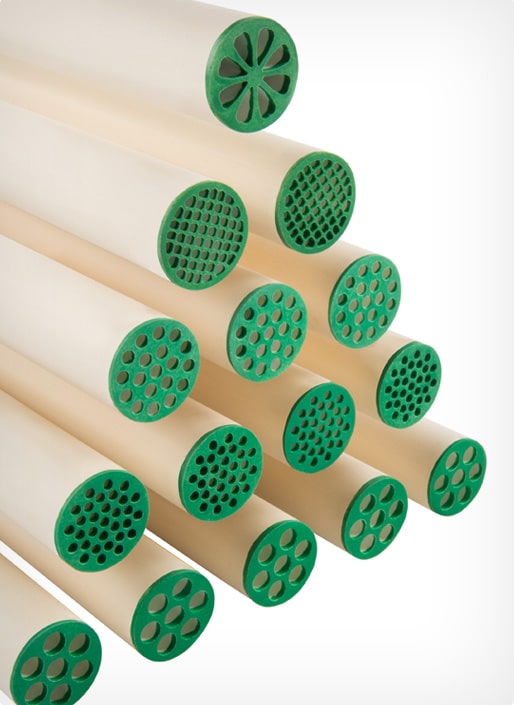
Traditional filtration approaches often struggle with surfactants, solvents, temperature fluctuations, and high solids content, leading to performance drift and higher operating costs. Stable membranes that tolerate aggressive cleaning and maintain predictable behavior help operators avoid interruptions and maintain throughput.
Across industries, variability in chemistry, production cycles, and regulatory expectations has elevated the need for durable, chemically resistant technologies. ALSYS supports these requirements with ceramic, polymeric, and hybrid membrane systems designed to withstand chemical, thermal, and mechanical stress. These solutions help users improve consistency, manage challenging feeds, and achieve more reliable long-term operation.
Performance Advantages That Matter Most
ALSYS' Membranes are engineered to maintain stable, predictable separation performance under variable feed compositions, harsh chemistries, and continuously changing operating conditions. By offering both durable ceramic materials and polymeric technologies, we help customers reduce fouling, extend service life, and achieve more consistent results across filtration, concentration, and purification processes.

High Stability in Harsh Conditions
Engineered to deliver consistent separation performance even with abrasive, high-temperature, or highly variable feeds.
Long-Lasting, Low-Maintenance Operation
Ceramic durability and optimized module design reduce cleaning frequency, downtime, and total lifecycle cost.

Consistent, High-Quality Product Streams
Selective membrane chemistries maintain predictable flux and retention across repeated cycles and changing operating environments.

Flexible Integration Across Processes
Available in multiple materials, pore sizes, and configurations to fit existing systems or support new process development.
Long Operating Life
Ceramic membranes offer multi-year operation with minimal performance loss, supported by cleaning protocols and validated system design.
Explore Our Membrane Technologies
ALSYS provides a full suite of ceramic and polymeric membrane technologies designed to address diverse separation challenges across industrial and research environments. Each product line supports predictable performance, long service life, and consistent results under demanding operating conditions.
Durability and Performance in Demanding Environments
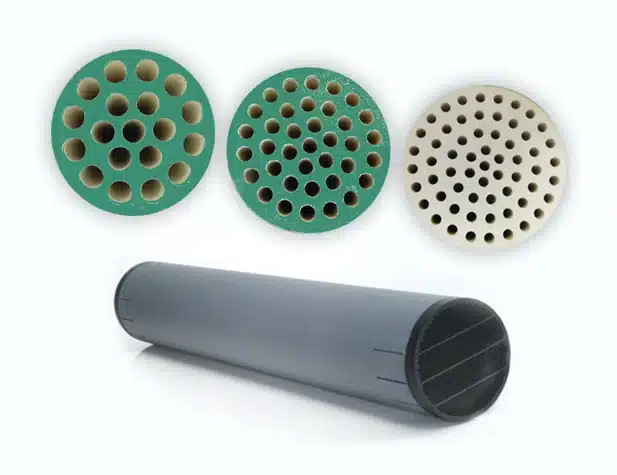
Ceramic membranes deliver stable performance where aggressive chemistries, high temperatures, and fluctuating feed conditions overwhelm conventional filtration tools. ALSYS’ Kleansep™ and CeraMem® technologies provide the durability, fouling resistance, and pore-size precision required for environments that demand uninterrupted reliability. From oil-in-water separation to the management of complex organics, ceramic materials maintain consistent flux and separation accuracy as feed compositions shift.
Operators facing rising maintenance costs and inconsistent system uptime increasingly rely on ceramics to standardize performance across industrial and pilot environments. ALSYS supports these needs through long service life and predictable behavior across repeated cleaning cycles. The result is a filtration platform that reduces operational variability and simplifies long-term process control.
ALSYS’ Track Record
ALSYS has decades of experience engineering ceramic membranes and modules for environments where stability, chemical resistance, and repeatability are critical to process viability. Kleansep™ and CeraMem® systems are manufactured with controlled pore architectures and sintered materials that maintain separation performance even under high temperatures, aggressive solvents, oxidizers, and oil-rich feeds. Their resistance to swelling and deformation ensures that operators see predictable flux behavior and stable cutoffs across long operating campaigns.
These membranes are supported by modular designs that simplify retrofits and enable efficient hydraulic cleaning, backpulsing, and chemical CIP programs without degrading membrane structure. ALSYS routinely assists clients with system sizing, pilot validation, and optimization of flux recovery protocols, ensuring each installation maximizes uptime and minimizes fouling. This combination of material science expertise and application engineering gives ALSYS a proven record of delivering durable separation solutions to industrial, chemical, and energy customers.
Explore More
A closer look at the process fluids and industries where ceramic membranes deliver the strongest performance.
Flexible Performance Across Diverse Process Conditions
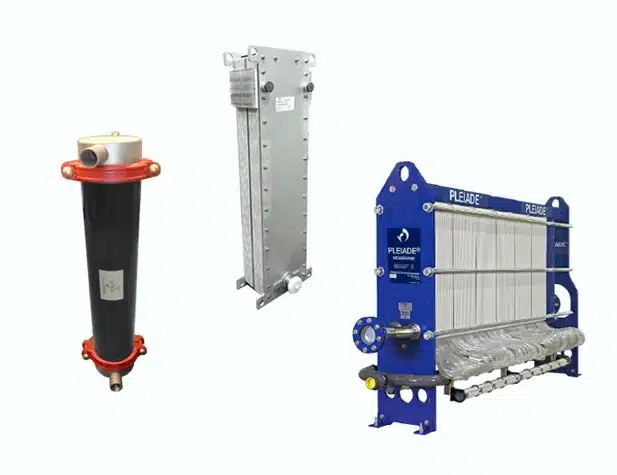
Polymeric membranes offer flexible, application-driven selectivity for industries that process emulsions, surfactant-rich mixtures, fine particulates, and variable organic loads. ALSYS’ Persep™, MP4™, and Pleiade™ families provide fine-tuned cutoffs, high permeability, and adaptable configurations that enable efficient clarification, concentration, and polishing. These systems help operators maintain product quality and throughput when feed behavior is unpredictable or sensitive to thermal exposure.
Across specialty chemicals, food and biotech, and advanced materials production, polymeric technologies address rising quality expectations and tighter purity specifications. ALSYS delivers membrane solutions designed to reduce fouling, maintain steady transmembrane pressures, and streamline cleaning requirements. Customers gain a filtration toolset that scales from bench to production while preserving consistency across batches and operational cycles.
ALSYS’ Track Record
ALSYS has built a reputation for polymeric membranes that balance selectivity, permeability, and mechanical robustness across a wide range of feed chemistries. The Persep™, MP4™, and Pleiade™ product lines use controlled polymer formulations and support structures that resist compaction, tolerate surfactants, and maintain stable flux during extended operating cycles. These membranes are engineered to minimize fouling while delivering predictable rejection performance for fine solids, emulsions, and product-quality-critical separations.
Beyond material development, ALSYS provides deep application support through pilot testing, configuration guidance, and process-integration expertise. Engineering teams routinely design custom membrane skids, optimize transmembrane pressure conditions, and refine cleaning sequences. This hands-on approach helps operators maintain throughput, reduce chemical consumption, and extend membrane service life, demonstrating ALSYS’ ability to support both demanding industrial separations and sensitive specialty-chemical production.
Explore More
See where polymeric selectivity and flexible system integration support downstream polishing and fine-filtration needs.
Advanced Pervaporation for Solvent Recovery and Azeotrope Removal
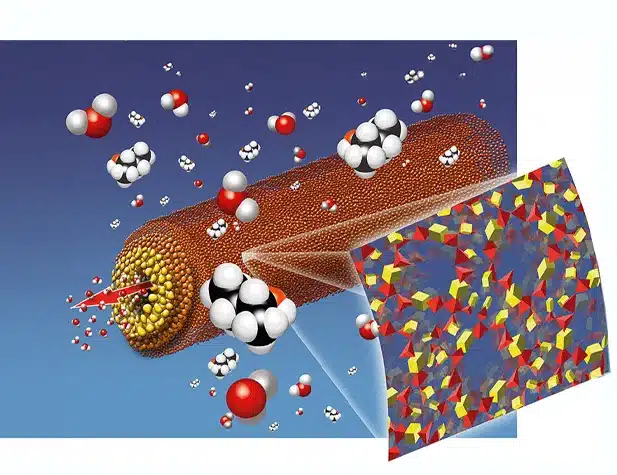
Pervaporation provides a highly selective pathway for solvent–water separation, azeotrope handling, and dehydration challenges that conventional thermal processes cannot efficiently address. ALSYS’ Hybsi® membranes combine inorganic selectivity with polymeric flexibility to deliver fast transport rates, chemical resistance, and long-term performance in demanding operating environments. These systems help customers lower energy consumption, reduce distillation load, and achieve purities that are difficult or costly to reach using standard techniques.
As manufacturers face stricter sustainability metrics and rising energy costs, pervaporation offers a reliable, lower-footprint approach to solvent management and product recovery. ALSYS supports these streams with membranes engineered for stable flux, predictable selectivity across varying feed compositions, and easy integration into hybrid separation trains. Customers gain a scalable, high-efficiency tool for improving overall process economics while meeting stringent purity and environmental requirements.
ALSYS’ Track Record
ALSYS’ Hybsi® pervaporation technology reflects extensive research in inorganic–polymeric hybrid structures built for solvent dehydration, azeotrope handling, and high-selectivity separations. These membranes maintain mechanical and chemical stability in mixtures containing organics, acids, and water while delivering strong separation factors and consistent permeation rates. Their ability to operate at elevated temperatures and under variable feed compositions makes Hybsi® a reliable choice for process intensification.
ALSYS supports pervaporation installations through pilot evaluation, system modeling, and hybrid design strategies that combine distillation, pervaporation, and solvent recycling. Engineering teams help customers refine operating temperatures, permeate-side vacuum settings, and membrane area sizing to achieve optimal purity and energy efficiency. This practical expertise, combined with durable membrane construction, positions Hybsi® systems as a trusted solution for solvent recovery and energy-conscious chemical production.
Explore More
Explore where selective solvent dehydration and azeotrope handling improve purification efficiency and reduce energy demand.
Integrated systems engineered for reliable, scalable separation performance.
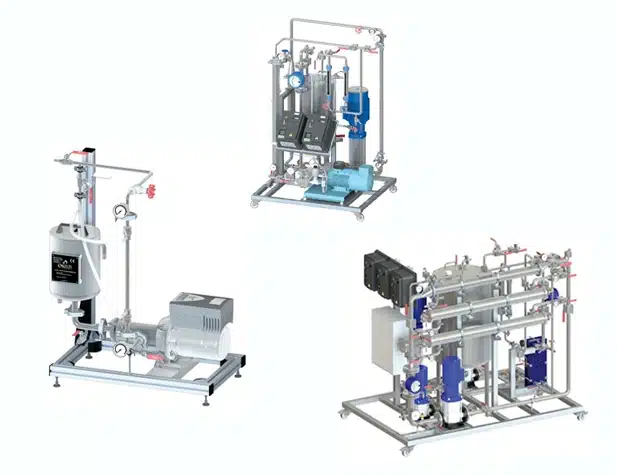
ALSYS’ membrane systems combine engineered skid design, optimized hydraulics, and application-specific configuration to support consistent clarification, concentration, and purification across industrial environments. Each system is sized and customized to manage real-world conditions, including fouling loads, surfactant content, solids variability, and aggressive cleaning requirements. By pairing proprietary ceramic and polymeric membranes with controlled flow regimes, operators achieve predictable behavior across both steady-state and batch processes.
These systems support customers who need proven separation performance without overcomplicated infrastructure or extensive in-house design resources. Skids can be configured for recycling, recovery, concentration, purification, effluent polishing, or process intensification, allowing operators to improve product quality and reduce waste while maintaining tight control over operating costs.
ALSYS’ Track Record
ALSYS delivers membrane systems that reflect decades of experience in designing, manufacturing, and integrating complete filtration units. Their approach brings membrane materials and system engineering under one roof, ensuring compatibility between modules, housings, controls, and cleaning protocols. This alignment reduces downtime, improves fouling resistance, and supports long equipment life under demanding industrial conditions.
The packaged-services model, from feasibility testing through commissioning and ongoing support, helps customers validate performance before scaling to production. Membrane systems have been deployed in chemical processing, oil and gas, food and feed, wastewater reuse, degreasing bath recovery, and metal removal, consistently demonstrating high stability, cleanability, and reliable throughput under challenging operational conditions.
Explore More
Gain a deeper view into where membrane systems create measurable value across industries.
Technical Resources for ALSYS Membranes
Access reference materials that support membrane selection, system sizing, and evaluation of performance under real-world operating conditions. These documents help teams compare technologies, understand material behavior, and plan for integration into existing processes.
Commonly Asked Questions About Membranes
Industrial processes place heavy and often unpredictable demands on separation equipment. These FAQs address the most common questions about integrating ALSYS’ ceramic, polymeric, and hybrid membranes into real-world operating environments. They offer clarity on performance behavior, pretreatment expectations, cleaning requirements, and how membrane systems behave when feed conditions, chemistry, and production cycles fluctuate.
Ceramic membranes operate in conditions that destroy polymeric membranes: extreme pH, high temperatures, caustic chemicals, and abrasive solids. They tolerate aggressive cleaning cycles and deliver years of reliable performance in harsh industrial environments where polymer materials fail within months.
Polymeric membranes provide precision selectivity for controlled environments. They excel in pharmaceutical purification, protein concentration, and fine polishing applications where tight molecular cutoffs and moderate operating conditions enable cost-effective separation.
Harsh conditions demand ceramic. Selective separation in controlled processes favors polymeric.
Membrane longevity depends on feed composition, fouling behavior, cleaning protocols, operational stability, and operator care. Streams containing emulsified oils, surfactants, corrosion inhibitors, or fine particulates can overload traditional filtration media, but ALSYS’ ceramic membranes resist these challenges by tolerating aggressive cleaning and maintaining flux through repeated cycles. ALSYS’ polymeric membranes remain reliable when operated within controlled temperature, chemical, and pressure conditions, delivering consistent separation where fine selectivity is required.
- Fouling driven by emulsions, fines, and organic load
- Cleaning chemistry adjusted to ceramic or polymeric materials
- Crossflow management influences shear and surface renewal
ALSYS supports customers with application-specific design, pilot testing, and ongoing performance guidance, ensuring membrane systems deliver predictable results year after year.
ALSYS’ membrane skids are engineered to integrate cleanly with upstream and downstream equipment for feeding polishing steps. Their modular design accommodates tight spaces, and system controls help maintain performance even when operators face inconsistent feedstock quality or variable operating schedules. Ceramic membranes typically serve as the primary barrier to solids and emulsions, while polymeric systems refine quality before reuse, discharge, or downstream processing.
- Modular ALSYS skids fit brownfield layouts without major redesign
- Temperature and chemistry windows guide material selection
- Membranes reduce load on downstream systems and improve reliability
With engineered modules and lifecycle support, ALSYS ensures that membrane integration strengthens overall plant performance rather than complicating existing operations.
Pervaporation becomes advantageous when separations are limited by boiling-point similarity, azeotropes, or solvent–water interactions that pore-based filtration cannot address. ALSYS Hybsi® pervaporation membranes enable selective dehydration and solvent purification without the energy burden of distillation, making them particularly valuable for heat-sensitive compounds such as flavors and fragrances that would degrade under traditional thermal processing.
By selectively removing water or solvents at low temperatures, Hybsi® membranes enable continuous esterification reactions where water removal drives equilibrium toward product formation without batch interruption. This capability makes pervaporation ideal for hybrid purification trains that combine membrane filtration, thermal processes, and catalytic systems.
While not used for solid-liquid separation, pervaporation complements both ALSYS’ ceramic and polymeric membranes by targeting dehydration or solvent recovery steps, thereby improving overall process efficiency.
- Effective for azeotrope breaking and solvent-rich feeds
- Reduces thermal stress on heat-sensitive compounds
- Integrates with ALSYS’ membrane skids and pilot units
ALSYS’ portfolio of pervaporation modules provides an additional separation pathway, giving operators more flexibility to meet purity targets that conventional filtration alone cannot achieve.
Find the Right Membrane Technology for Your Application
Get tailored guidance on membranes that match your operating conditions.