
Membrane Filtration in Chemical Processing
Chemical manufacturing operations require membranes capable of withstanding organic solvents, extreme pH, and elevated temperatures. Polymeric membranes often cannot maintain performance under these conditions.
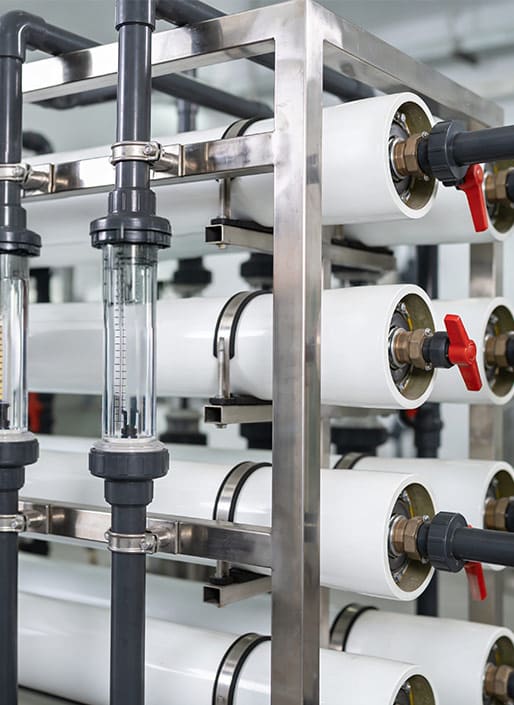
ALSYS Membranes provides ceramic Kleansep™ and CeraMem® systems that handle organic solvents, pH 0-14, and temperatures up to 212°F. (100 °C0 Hybsi® pervaporation membranes enable solvent dehydration and azeotrope breaking.
With over 30 years of experience serving specialty chemical, pharmaceutical, and fine chemical manufacturers, ALSYS delivers membrane solutions from feasibility testing through commissioning. We provide engineering, procurement, construction management, and startup support. Combined, this provides complete value chain coverage from technology selection through operational handover.
Chemical Manufacturing Membrane Capabilities
ALSYS Membrane systems are designed for reliable performance in demanding chemical processing environments. Systems combine chemical resistance, high-temperature capability, and flexibility in process integration.
Extreme Chemical Resistance
Silicon carbide and aluminum oxide ceramic membranes withstand most organic solvents, acids, bases, and oxidizers without degradation.
High-Temperature Processing
Membrane systems operate at process temperatures to 212°F (100 °C) without performance loss.
Pervaporation for Difficult Separations
Hybsi® membranes break azeotropes and dehydrate solvents that distillation cannot efficiently separate, and have proven performance in harsh chemical environments, including acidic conditions.
Hazardous Area Experience
We design systems for classified areas with explosion-proof equipment and grounding.
Membrane Filtration Solutions for Chemical Processing
ALSYS Membranes solve separation challenges in solvent operations and specialty chemical production.
Overview
A key part of producing a high-quality electrocoat paint finish is surface preparation before coating. Typically, the metal parts are washed with warm or hot solutions containing water, caustic, surfactants, and soaps. The purpose of the wash is to remove oil, grease, suspended solids, and other foreign matter from the surface to be coated, so that the e-coat paint may properly adhere to the metal.
The parts are typically washed by immersion in a tank with a fixed volume of washer solution.
Without ultrafiltration, the amount of oil, grease, and other contaminants in the washer will accumulate, and eventually, the wash solution will no longer be effective. At this point, the wash solution must be discarded and replaced with a new one.
- Wastewater disposal
- Down time
- Washer solution
- Energy for heating the washer solution
Ultrafiltration may be used to continuously remove contaminants from the wash solution, resulting in the following benefits:
- Decreased wastewater disposal costs
- Less downtime
- Reduced the purchase of fresh cleaner solution
- Reduced energy usage
- More consistent quality of cleaned surface
ALSYS’ Track Record
ALSYS brings over 30 years of experience to automotive degreaser recycling, where our Kleansep™ and CeraMem ceramic ultrafiltration systems are engineered to perform reliably. These systems are specifically designed to operate continuously under the demanding conditions of elevated temperatures and high pH levels common in degreasing baths, overcoming the performance limitations often associated with standard polymeric membranes.
The core solutions offered include the high-performance Kleansep™ ceramic ultrafiltration membranes, optimized for high-temperature and high-pH environments. To ensure continuous, efficient operation, the systems feature automated backwashing and Clean-in-Place (CIP) capabilities. Furthermore, we provide complete system engineering and seamless integration with both spray and immersion degreasing lines, delivering a comprehensive and robust filtration solution.
Application Overview
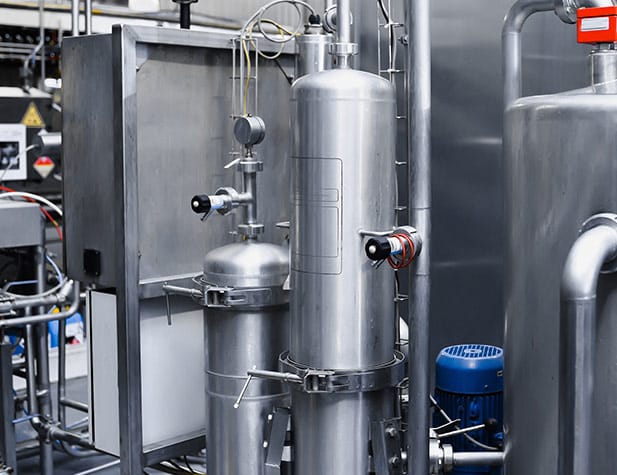
Specialty chemical production often involves expensive catalysts or high-value intermediates, necessitating gentle separation processes that avoid high temperatures. ALSYS addresses these demanding requirements by supplying custom membrane systems for proprietary chemical processes, leveraging robust ceramic membranes capable of handling challenging conditions, including organic solvents, extreme pH, and delicate catalysts.
The comprehensive ALSYS portfolio of related solutions includes a complete membrane offering with ceramic microfiltration (MF)/ultrafiltration (UF), polymeric nanofiltration (NF), and pervaporation technologies for various separation needs. The company also provides custom construction materials for corrosive fluids and small-scale systems, ideal for high-value, low-volume products. These solutions are coupled with complete Engineering, Procurement, and Construction Management (EPCM) from ALSYS Engineering.
ALSYS’ Track Record
Specialty chemical production often requires customized separation solutions, and ALSYS has extensive experience supplying custom membrane systems specifically designed for proprietary chemical processes. This tailored approach is essential for manufacturers dealing with unique compounds and complex production requirements, ensuring the separation technology aligns perfectly with our specialized operational needs.
These custom systems leverage robust ceramic membranes engineered to withstand the most challenging chemical processing environments. The membranes are capable of withstanding aggressive conditions, including virtually all organic solvents, extreme pH levels, and the presence of delicate or expensive catalysts, providing a reliable and gentle method for product purification and recovery.
Questions About Membrane Filtration in Chemical Processing
Below are answers to common questions about how ALSYS’s advanced membrane technology addresses the unique challenges of chemical processing.
Ceramic membranes, such as CeraMem® (silicon carbide supports) and Kleansep™ (aluminum oxide supports), are chemically inert and can withstand virtually all organic solvents, with the only limitation being hydrofluoric acid (HF), which attacks silica-based ceramics. Furthermore, a specialized process called pervaporation enables selective transfer of components from liquid mixtures through a membrane. This technique proves advantageous in applications where distillation is inefficient, such as breaking azeotropes, dehydrating solvents at low temperatures, or integrating into synthesis reactors, often resulting in energy savings up to 75%.
To ensure safe operation in classified areas, ALSYS Engineering has extensive experience designing membrane systems for hazardous locations. Our comprehensive approach includes the use of explosion-proof motors, intrinsically safe instrumentation, appropriate electrical components, proper bonding and grounding, and inerting when necessary. Customers with separation requirements are encouraged to discuss our specific needs with the chemical processing team to find the right, robust solution.
Pervaporation is a membrane-based separation process in which water vapor transfers from a liquid mixture through a membrane. This technique offers significant advantages over traditional distillation methods in certain applications, such as breaking azeotropes, dehydrating solvents at low temperatures, and integrating into synthesis reactors, often resulting in energy savings of up to 75% for specific separations.
When designing membrane systems for hazardous locations, we leverage our experience with classified area installations. Their approach ensures safe operation by incorporating necessary measures, including the use of explosion-proof motors, intrinsically safe instrumentation, appropriate electrical components, proper bonding and grounding, and inerting when required.
To find the right solution for your chemical processing requirements, it is highly recommended that you discuss your separation needs directly with the chemical processing team. They can provide tailored guidance and expertise to help you select a robust, effective filtration system.
Find the Right Solution for Your Chemical Processing Requirements
Discuss your separation requirements with our chemical processing team.