
Comprehensive Engineering Across Your Project Lifecycle
Membrane and catalyst system integration requires specialized expertise spanning process design, equipment engineering, regulatory compliance, and operational validation. Project success depends on appropriate technology selection, accurate performance prediction, and seamless integration into existing facilities.
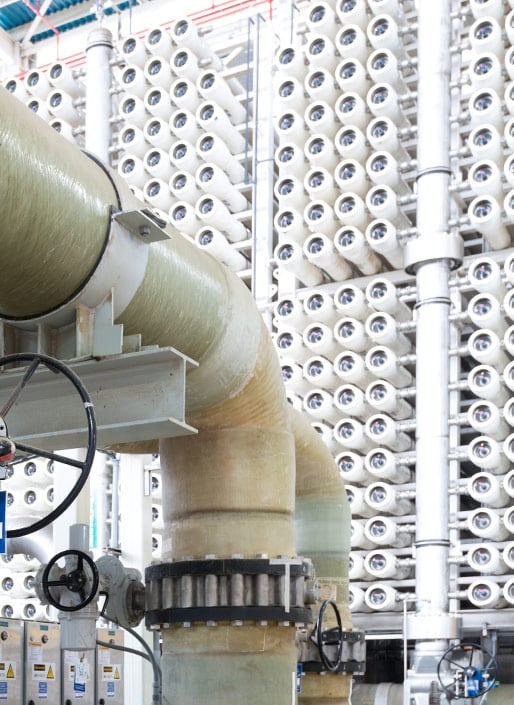
ALSYS Engineering provides complete engineering, procurement, construction management, and commissioning support for industrial water treatment, chemical separation, and emissions control applications. Our team combines membrane and catalyst expertise with process, mechanical, electrical, instrumentation, and structural engineering capabilities to deliver turnkey solutions.
From initial feasibility assessment through startup support and operator training, ALSYS manages project execution while you maintain focus on core operations. With experience across 500+ installations worldwide in pharmaceutical, chemical, oil and gas, food processing, and industrial manufacturing sectors, our engineering approach balances technical performance, project economics, and schedule certainty.
Proven Engineering Expertise Reducing Project Risk
ALSYS' integrated engineering approach addresses the full project lifecycle, from early-stage technology evaluation through long-term operational support, ensuring your membrane or catalyst system delivers designed performance from day one.
Technology-Agnostic Evaluation
Our engineers select the best separation or emissions-control technology for your application, whether it’s ceramic membranes, polymeric membranes, pervaporation, or catalytic systems, based on demonstrated performance rather than product-inventory pressure.
Multidisciplinary Team
In-house process, mechanical, electrical, instrumentation, structural, and civil engineering capabilities eliminate coordination gaps typical of multi-vendor projects.
Global Project Experience
More than 500 installations worldwide across industrial manufacturing, oil and gas, pharmaceutical, and food processing sectors provide proven design precedents and lessons learned.
Single-Point Accountability
One contract, one schedule, and one team responsible for complete EPCM delivery reduce interfaces, clarify responsibility, and accelerate project execution.
Your Project Requirements, Supported
ALSYS provides engineering services scaled to project complexity—from desktop feasibility studies through complete EPCM delivery, across membrane filtration, pervaporation, and catalytic systems.
Service Overview
Early-stage projects require rapid evaluation of technical feasibility, capital and operating costs, and technology alternatives before committing to detailed engineering or equipment procurement.
ALSYS feasibility studies assess membrane, pervaporation, or catalyst technologies for specific applications, providing performance predictions, preliminary equipment sizing, cost estimates, and technology comparison. Studies identify project risks and recommend pilot testing or additional data collection to support the final design.
ALSYS’ Track Record
ALSYS has completed more than 200 feasibility studies for industrial water treatment, chemical separation, and emissions control applications. Studies inform go/no-go decisions, support capital appropriation requests, and establish project scopes for detailed engineering.
Desktop evaluations combine process simulation, membrane/catalyst selection algorithms, and equipment performance databases to predict system behavior. When existing data is insufficient, bench testing or pilot programs generate application-specific performance data.
Service Overview
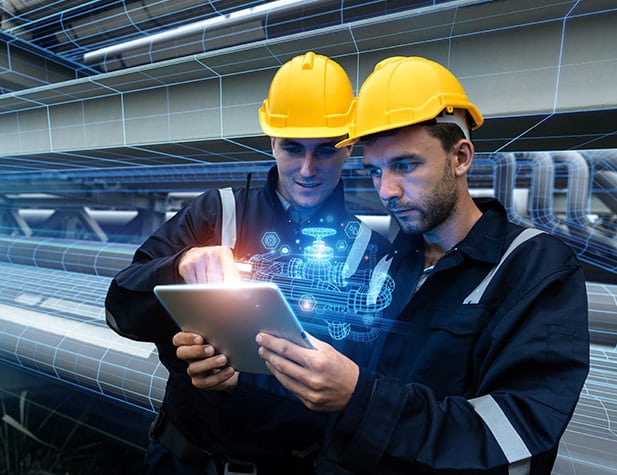
Pilot testing validates membrane or catalyst performance with actual process streams before full-scale system design. Testing identifies optimal operating conditions, cleaning protocols, and long-term fouling behavior that cannot be predicted from desktop analysis.
ALSYS pilot programs range from bench-scale laboratory evaluations (5-10 liters) to skid-mounted pilot systems (10-100 m³/hr) that operate at customer sites for weeks to months.
ALSYS’ Track Record
ALSYS operates two test centers equipped with 20+ pilot systems for evaluating ceramic and polymeric membranes and pervaporation. More than 500 pilot programs have been conducted across pharmaceutical, chemical, food processing, and industrial manufacturing sectors.
Pilot data help determine final membrane selection, optimal flux rates, cleaning chemical selection, and equipment sizing for full-scale systems. Extended pilots (>1000 operating hours) establish long-term fouling rates and membrane life predictions.
Service Overview
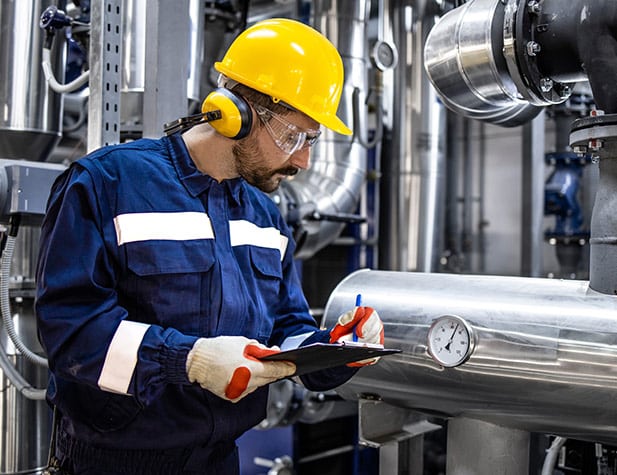
Process engineering translates project requirements and pilot data into detailed process designs, including mass and energy balances, P&IDs, equipment specifications, and control narratives. Design documents guide procurement, fabrication, and commissioning activities.
ALSYS process engineers design membrane filtration, pervaporation, and catalyst systems integrated with upstream and downstream unit operations. Designs account for flow variability, feed quality changes, and operational upsets typical of industrial processes.
ALSYS’ Track Record
ALSYS has designed systems ranging from <1 m³/hr laboratory units to 1,500 m³/hr industrial installations. Process designs incorporate decades of operating experience across 500+ installations worldwide.
Engineering deliverables include process flow diagrams, P&IDs, equipment datasheets, control logic narratives, and design basis memoranda. 3D modeling capabilities support detailed equipment layout and piping design for complex installations.

Service Overview
Detailed engineering develops construction-ready documents including mechanical drawings, electrical one-lines and schematics, instrumentation loop diagrams, structural calculations, and material takeoffs. These documents support equipment fabrication, procurement, and field installation.
ALSYS’ multidisciplinary engineering team provides complete mechanical, electrical, instrumentation, structural, and civil engineering for membrane and catalyst systems.
ALSYS’ Track Record
ALSYS Engineering teams have delivered complete, detailed engineering packages for systems ranging from skid-mounted units to multi-million-dollar industrial facilities. Recent projects include 100,000+ engineering hours, 4,300+ instrumented tags, and coordination of 120+ equipment vendors.
In-house capabilities include 3D modeling (Autodesk Plant 3D, AutoCAD), electrical design, PLC programming (Allen-Bradley, Siemens), HMI development, and structural analysis. Engineering deliverables meet customer standards and local code requirements.
Service Overview
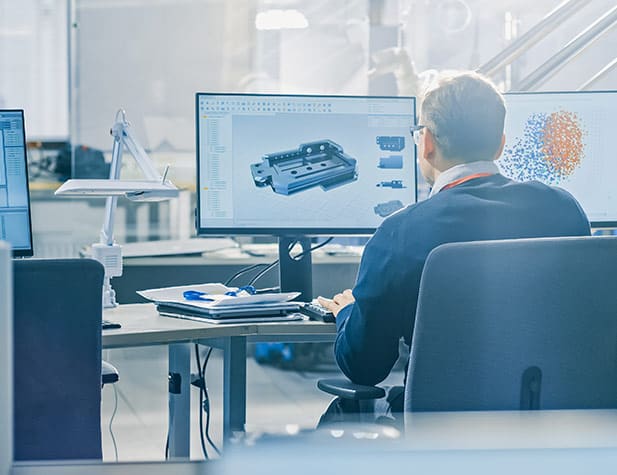
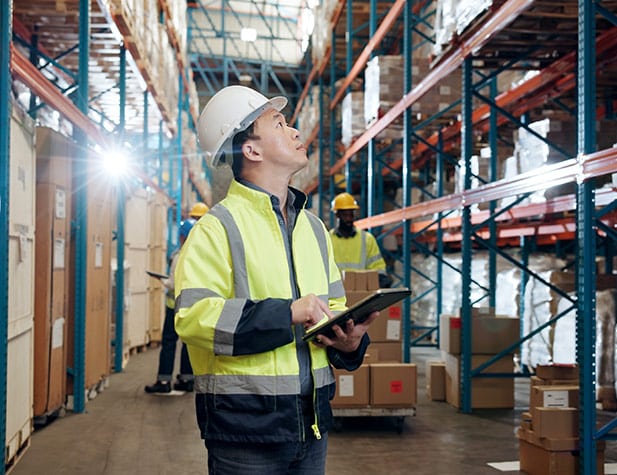
Procurement activities include equipment specification, vendor qualification, bid evaluation, purchase order management, expediting, and quality assurance. Effective procurement ensures equipment meets specifications, arrives on schedule, and performs as designed.
ALSYS manages procurement for complete membrane and catalyst systems, including membranes, modules, pumps, valves, instrumentation, electrical components, structures, and piping materials.
ALSYS’ Track Record
ALSYS procurement teams manage vendor networks spanning membrane manufacturers, equipment fabricators, instrumentation suppliers, and specialty component providers. Established relationships with 200+ vendors support competitive pricing and reliable delivery.
Procurement management includes bid solicitation, technical evaluation, commercial negotiation, purchase order management, expediting, shipping coordination, and receiving inspection. Quality assurance programs verify equipment conformance to specifications before shipment.
Service Overview
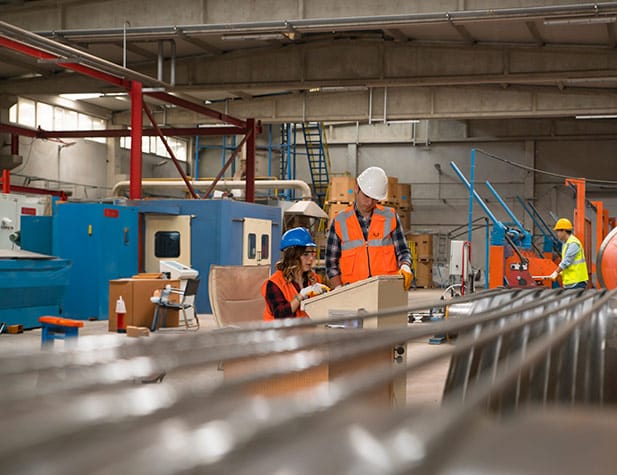
Construction management ensures field installation meets design intent, schedule commitments, and budget targets. Activities include contractor selection, construction planning, field supervision, quality control, and safety management.
ALSYS construction management services range from technical support during customer-managed construction to complete turnkey field execution, including foundation work, equipment setting, piping installation, electrical work, and system integration.
ALSYS’ Track Record
ALSYS has managed construction for membrane and catalyst installations across North America, Europe, Asia, and Australia. Projects include greenfield installations, brownfield retrofits, and operating-plant expansions that require minimal production interruption.
Construction management capabilities include work-packaging, contractor qualification, safety program development, progress monitoring, quality control, change management, and closeout documentation.

Service Overview
Commissioning activities verify installed systems meet design specifications and performance guarantees before handover to operations. Startup support ensures a smooth transition to continuous operation. Operator training equips operators with the skills necessary for safe, effective system operation.
ALSYS commissioning services include pre-startup inspections, functional testing, performance validation, operational troubleshooting, and documentation delivery.
ALSYS’ Track Record
ALSYS has commissioned more than 500 membrane and catalyst systems worldwide. Commissioning programs verify mechanical completion, validate control sequences, confirm process performance, and train operators for independent operation.
Startup support typically continues for 1-4 weeks after initial commissioning, allowing optimization of operating parameters and addressing operational questions. Operator training includes classroom instruction, hands-on operation, troubleshooting procedures, and maintenance protocols.
Service Overview
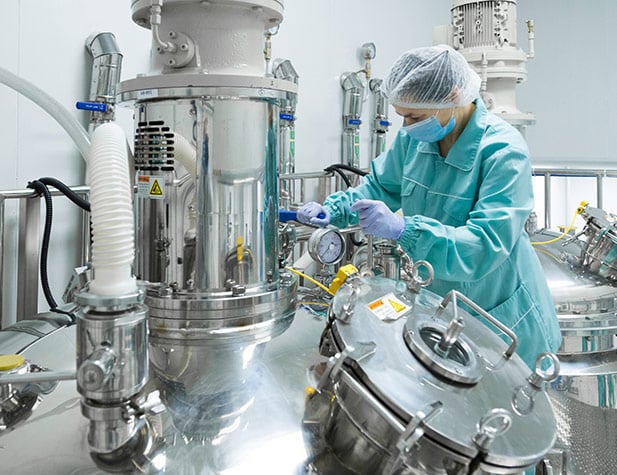
Operating membrane and catalyst systems require periodic technical support for performance troubleshooting, process optimization, and maintenance planning. ALSYS provides ongoing operational support through remote consultation, site visits, membrane autopsies, and performance audits.
System optimization identifies opportunities to improve flux, reduce cleaning frequency, reduce chemical consumption, or extend membrane life by analyzing operating data.
ALSYS’ Track Record
ALSYS conducts 30+ membrane autopsies annually, analyzing used membranes to identify fouling mechanisms, assess cleaning effectiveness, and recommend operational changes. Operating support visits address performance issues, train replacement operators, and validate maintenance procedures.
Remote monitoring and data analysis services identify emerging performance trends before they affect production, enabling proactive intervention.
What You Need To Know About Engineering & Consulting Services
Project owners evaluating membrane or catalyst technologies face questions about project delivery approach, technology validation, cost certainty, and schedule risk. These FAQs address the engineering service scope, the value of pilot testing, and project execution considerations.
Pilot testing provides three critical benefits that desktop studies cannot deliver: performance validation with actual process fluids, long-term fouling data, and optimization of operational parameters. Desktop studies use historical data and simulations for initial screening and budgetary estimates. Still, they are inherently uncertain because real-world feed composition, fouling mechanisms, and cleaning responses vary significantly across applications.
Pilot testing generates application-specific performance data with your actual process stream, identifying the optimal membrane type, operating flux, cleaning chemicals, and cleaning frequency based on demonstrated performance. This gives you confidence that full-scale systems will achieve the designed performance, as predictions are grounded in measured data from pilot operations.
EPCM (Engineering, Procurement, Construction Management) delivery offers four primary advantages: single-point accountability, reduced interfaces, schedule compression, and design-build integration.
Single-point accountability means one entity is responsible for complete project delivery from design through commissioning. Interface issues between engineering and construction, design errors, field changes, and performance shortfalls are resolved within the EPCM contract rather than disputed between separate contractors.
Reduced interfaces eliminate coordination gaps typical of multi-contract projects. Engineering deliverables align with construction requirements because the same team manages both. Procurement timing supports construction schedules because equipment lead times inform engineering completion dates.
Schedule compression results from overlapping engineering and procurement activities. Long-lead equipment can be ordered based on preliminary designs while detailed engineering continues. Construction planning begins during engineering rather than waiting until 100% design is complete.
Design-build integration allows construction feedback to inform design decisions. Field installation constraints, vendor capabilities, and local construction practices shape engineering details, reducing field modifications and construction delays.
For complex membrane or catalyst systems requiring multidisciplinary engineering, specialized equipment, and tight project schedules, EPCM delivery typically reduces total project duration by 20-30% compared to separate engineering and construction contracts while providing clearer accountability for project outcomes.
Pilot testing provides three critical benefits that desktop studies cannot deliver: performance validation with actual process fluids, long-term fouling data, and optimization of operational parameters. Desktop studies use historical data and simulations for initial screening and budgetary estimates. Still, they are inherently uncertain because real-world feed composition, fouling mechanisms, and cleaning responses vary significantly across applications.
Pilot testing generates application-specific performance data with your actual process stream, identifying the optimal membrane type, operating flux, cleaning chemicals, and cleaning frequency based on demonstrated performance. This allows you to gain confidence that full-scale systems will achieve the designed performance since predictions are grounded in measured data from pilot operations.
Most membrane and catalyst systems operate successfully with general industrial operator skills, supplemented by focused system-specific training, though requirements depend on system automation and process complexity. Routine operation typically involves monitoring process parameters, responding to alarms, performing cleaning cycles, and maintaining basic logs.
Automated systems that use PLC control and HMI interfaces are designed to minimize operator intervention for routine tasks such as cleaning cycles, allowing operators to primarily monitor system status and respond to automated prompts. Troubleshooting more complex operational issues, however, may require technical support from dedicated maintenance personnel, plant engineers, or ALSYS service representatives.
ALSYS ensures a smooth transition to operation through a comprehensive commissioning program that typically spans 2–5 days and covers system operation theory, cleaning protocols, maintenance, and safety. Detailed operations and maintenance manuals are also provided as key references. For your complex installations or limited technical staff, ALSYS offers extended startup support, remote monitoring, and annual maintenance visits.
Talk To Our Team About Your Project Requirements
Discuss your project objectives with our engineering team to identify the optimal delivery approach for your membrane or catalyst system.