
Advanced Separation for Chemical Process Streams
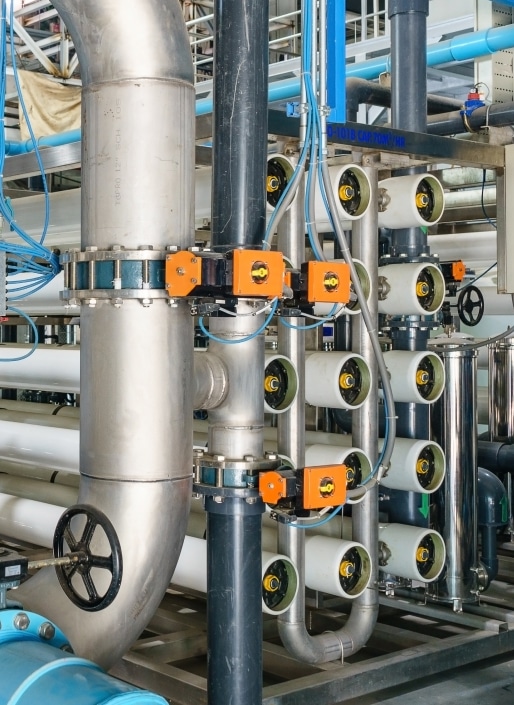
Chemical manufacturing generates process streams containing acids, bases, solvents, catalysts, and reaction byproducts that require separation, concentration, or purification before reuse or discharge.
ALSYS’ ceramic and polymeric membrane systems operate reliably in environments where traditional separation methods struggle with chemical compatibility, thermal stability, or selectivity requirements. Engineered to withstand pH extremes from 0-14, temperatures exceeding 90°C, and aggressive chemical exposure, our Kleansep™, CeraMem®, and Hybsi® pervaporation technologies deliver consistent separation performance across diverse chemical applications.
ALSYS Expertise At A Glance
With installations in fine chemical production, pharmaceutical manufacturing, and specialty materials processing, ALSYS provides complete solutions from laboratory feasibility testing through full-scale system commissioning. Our integrated approach, which comprises combining membrane selection, process engineering, pilot validation, and turnkey delivery, reduces project risk while optimizing separation efficiency and chemical recovery economics.
Proven Chemical Separation Capabilities Built for Process Reliability
ALSYS' membrane and pervaporation systems address chemical separation challenges where conventional distillation or evaporation cannot deliver the required selectivity, energy efficiency, or product quality.
Extreme Chemical Resistance
Our ceramic membranes tolerate pH 0-14 and resist degradation from strong acids, caustics, oxidizers, and organic solvents, maintaining stable flux across thousands of operating hours in your most demanding chemical environments.
Energy-Efficient Separation
Pervaporation systems achieve up to 75% energy savings versus distillation for solvent dehydration and azeotrope breaking, reducing your operating costs while improving product purity.
Molecular-Level Selectivity
Ultrafiltration and nanofiltration membranes fractionate molecules by size, enabling catalyst recovery, product purification, and contaminant removal without thermal degradation of heat-sensitive compounds in your process.
Complete Process Integration
ALSYS Engineering delivers bench testing, pilot programs, detailed engineering, procurement, construction management, and commissioning support to ensure seamless integration with your existing chemical processes.
Your Separation Challenges, Solved
ALSYS's ceramic membranes and pervaporation systems deliver reliable performance where chemical complexity, thermal sensitivity, or selectivity requirements exceed conventional separation capabilities.
Application Overview
Metal pickling, chemical etching, and hydrometallurgical operations generate spent acid streams containing dissolved metals and particulates. Traditional evaporation-based acid recovery consumes substantial energy and may degrade heat-sensitive products. Membrane filtration removes suspended solids. ALSYS’ ceramic ultrafiltration systems treat spent sulfuric, hydrochloric, nitric, and phosphoric acid streams, removing metal precipitates and suspended solids while maintaining acid concentration and purity for process return to the process.
Ceramic membranes resist acid attack at pH <1 and tolerate elevated temperatures during processing. Systems operate continuously with automated cleaning cycles using compatible chemical rinses.
ALSYS’ acid-resistant module materials (titanium, Hastelloy, PVDF) and validated cleaning protocols ensure long-term system reliability in your aggressive acid environments.
Common Questions About Chemical Stream Purification
These FAQs address the selection of membrane and pervaporation technologies, performance expectations, and integration considerations for acid, caustic, and solvent purification applications in your processes.
Pervaporation reduces energy consumption by 70-75% compared to distillation because only the water vapor passes through the membrane. In azeotrope-forming systems, pervaporation breaks the azeotrope without the use of entrainer chemicals, achieving greater than 99.5% purity in a single stage while protecting heat-sensitive compounds from thermal degradation.
Pervaporation routinely achieves greater than 99.5% purity for pharmaceutical solvents. Zeolite-A membranes produce ethanol and isopropanol with water content below 0.1%, meeting USP/Ph. Eur. specifications, while Hybsi® membranes handle aggressive solvents and acidic systems at 99-99.5% purity.
Ceramic membranes operate over pH 0-14, to 150°C, and withstand aggressive chemicals, and typically last 10-20 years, making them ideal for extreme conditions. Polymeric membranes excel in organic solvents and tight nanofiltration applications but require eventual replacement, favoring moderate conditions with lower capital investment.
Talk To Our Team About Your Chemical Separation Requirements
Discuss your acid, caustic, or solvent purification application with our chemical process specialists.