
Improving Efficiency Across Oil and Gas
Oil and gas companies are dealing with higher costs and more complex treatment systems. Reliable separation is now key to reaching production targets and meeting sustainability goals.
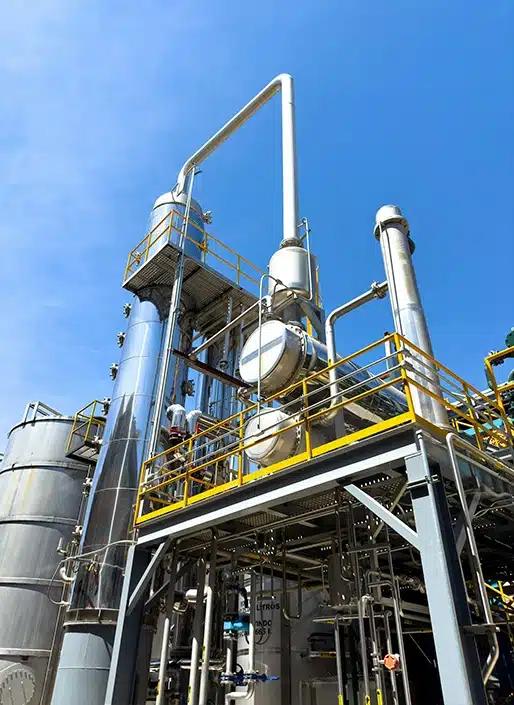
Older equipment, changing feed chemistry, and tougher environmental rules are making it harder for traditional technologies to keep up. Operators need to manage uptime, energy use, and risk while handling difficult streams.
ALSYS offers integrated solutions for liquid separation, emissions control, and system deployment. Our platform brings together ALSYS Membrane & Filtration Technologies for water and process streams, ALSYS Catalysts & Emission Control for vapor recovery and air quality, and ALSYS Engineering for system design and installation. This full-service approach gives operators complete, ready-to-use solutions.
How ALSYS Strengthens Oil and Gas Operations
Oil and gas facilities demand separation solutions that remain reliable under harsh, variable, and continuously evolving conditions. ALSYS combines durable materials, application expertise, and lifecycle support to help operators improve uptime, reduce treatment costs, and protect downstream assets.
Clarification Built for Challenging Water
Ceramic membranes maintain stable flux in oily, surfactant-rich, and highly variable streams common in upstream and midstream operations.
Energy-Efficient Solvent and Process Purification
Pervaporation and membrane-based systems improve dehydration and separation performance where distillation and thermal processes become inefficient.
Reliable Emissions Control Across Thermal Equipment
Environmental catalysts help operators meet NOx and VOC targets with stable, long-life performance in demanding refining and petrochemical environments.

Support From Feasibility Through Long-Term Operation
ALSYS engineers assist with pilot testing, system design, commissioning, and lifecycle optimization to ensure sustained, predictable performance.
Improving Produced Water Quality with Ceramic Ultrafiltration
Ceramic ultrafiltration provides stable performance in high-oil, high-surfactant produced water where traditional systems struggle. The membranes consistently remove emulsified oil and fine solids while maintaining flux under variable feed conditions. Systems are engineered to integrate into existing produced-water treatment trains with minimal disruption, supporting both brownfield upgrades and new installations. Operators benefited from reduced chemical demand, easier cleaning, and modular, scalable configurations that allow capacity to expand as production profiles evolve.
Where ALSYS Technologies Add Value Across Oil & Gas
Oil and gas operators manage complex fluids, variable chemistries, and strict environmental requirements. The segments below outline the major operational areas where ALSYS technologies improve reliability, efficiency, and compliance.
Overview
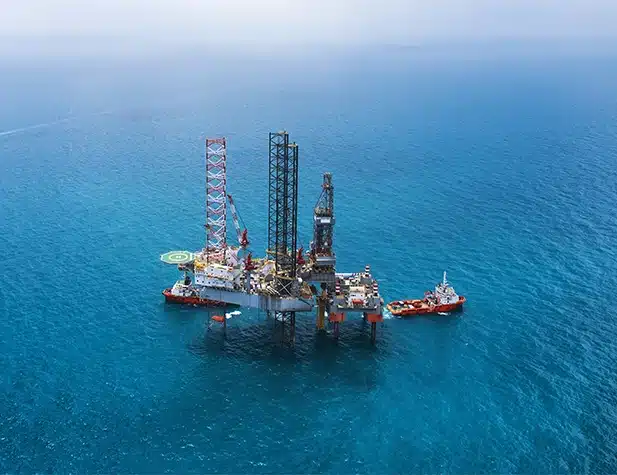
Upstream operations manage produced water, injection water, surfactant-rich emulsions, and solids that disrupt separation performance and drive operating costs. Facilities must maintain stable flux, reduce downtime, and consistently meet reinjection or discharge specifications despite rapidly changing feed conditions.
Harsh chemicals, high fouling potential, and variable production chemistry challenge conventional filtration. Upstream operators require systems that tolerate aggressive cleaning, handle emulsified oils, and maintain predictable performance in both continuous and batch treatment modes.
ALSYS’ Track Record
ALSYS provides membrane and catalyst technologies engineered for difficult upstream fluids. These solutions help operators stabilize performance, streamline maintenance, and handle complex water chemistries encountered in the field.
- Flux stability with oily, surfactant-heavy, and variable produced-water feeds
- Proven membrane durability under frequent high-pH and oxidizing cleanings
- Systems designed for offshore platforms, onshore facilities, and compact skid integrations
These capabilities allow upstream operations to reduce treatment costs, improve uptime, and meet evolving environmental and performance standards.
Related Solutions
Upstream facilities typically require technologies capable of separating oil-in-water emulsions, managing high-solids loading, and supporting robust cleaning regimes. The solutions below address the core operational challenges in treating produced water and utility water, delivered as standalone membrane elements, engineered systems, or turnkey modular packages, depending on site requirements.
- Ceramic Membranes, Polymeric Membranes, and Pervaporation
- Catalysts for NOx and VOC Reduction in field heaters and combustion units
Related Applications
Upstream separation challenges often begin with the produced fluids themselves. The applications below outline the core treatment steps that upstream teams rely on most, from handling emulsified wellstream water to removing oil and surfactants that conventional equipment struggles to handle.
Overview
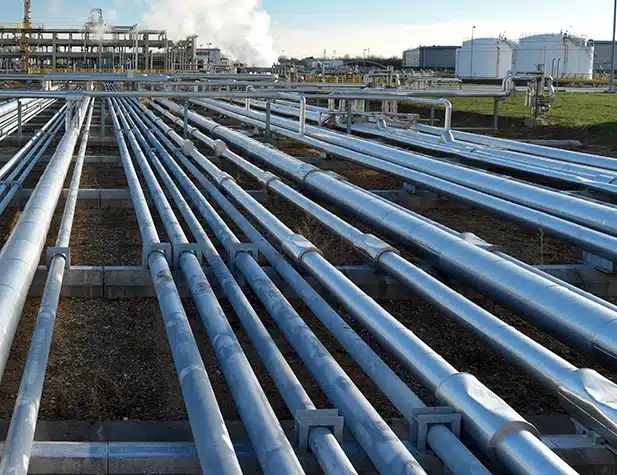
Midstream operations manage gathering systems, pipelines, storage terminals, and compressor stations. Fluids encountered in these environments often contain emulsions, corrosion inhibitors, solids, and hydrocarbons that cause fouling and increase treatment load. Ensuring reliable water quality, minimizing unplanned maintenance, and maintaining air-emissions compliance are essential.
Operations must balance throughput, equipment protection, and environmental obligations. Stable polishing and emissions-control systems help operators maintain efficiency across large, distributed midstream networks.
ALSYS’ Track Record
ALSYS membranes and catalysts support midstream reliability by improving separation consistency and reducing the operational impact of variable feed streams.
- Clarification and polishing of utility water in terminals and pipeline facilities
- Emissions catalysts for compressor station heaters and process heaters
- Systems engineered to handle midstream-specific chemical additives and fouling mechanisms
These technologies help reduce maintenance frequency, extend asset life, and support regulatory compliance across the midstream sector.
Related Solutions
Midstream treatment needs center on reliable polishing, fouling resistance, and emissions management. The solutions below align with common midstream water and air-quality requirements. Systems are engineered for modular deployment and retrofit integration, enabling distributed installation across pipeline terminals, compressor stations, and processing facilities without major infrastructure modifications.
- Ceramic Membranes and Polymeric Membranes
- VOC Emission Control Catalysts and NOx Reduction Catalysts
Related Applications
Midstream operators depend on consistent water quality and controlled emissions to keep pipelines, terminals, and compressor stations running smoothly. These application areas speak directly to the polishing and air-quality needs that shape midstream performance every day.
Overview
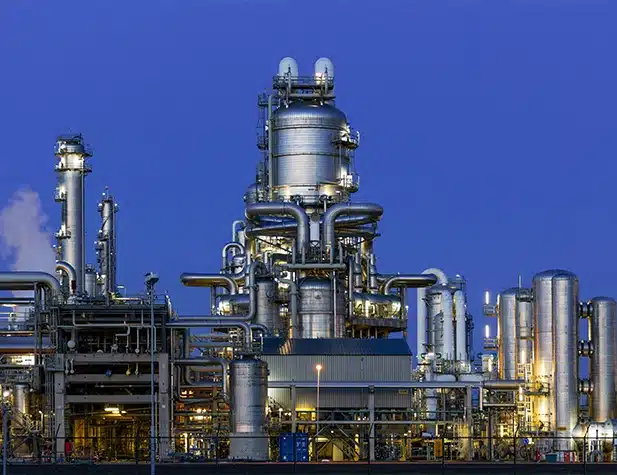
Downstream facilities manage demanding chemical mixtures, solvents, acids, surfactants, and high-temperature fluids that require precise and stable separation. Product quality, unit efficiency, energy use, and regulatory compliance all hinge on reliable filtration and emissions control across integrated refinery and petrochemical systems.
Operators must maintain consistent separation performance despite aggressive chemistries and frequent cleaning cycles. They also rely on catalytic emissions solutions to control NOx and VOCs produced by furnaces, boilers, and heaters.
ALSYS’ Track Record
ALSYS provides membrane and catalyst technologies designed for the chemical and thermal stresses common in downstream environments.
- Solvent-resistant membranes for dehydration, purification, and solids removal
- Long-term stability under aggressive cleaning and solvent exposure
- Catalysts used in refinery heaters and furnaces to reduce NOx and VOC emissions
ALSYS supports downstream operators by improving purification efficiency, increasing system uptime, and reducing emissions across diverse processing units.
Related Solutions
Downstream separation requires technologies capable of handling strong solvents, high temperatures, and variable feed compositions. The solutions below support key processes in refining and petrochemical operations, from targeted unit-level upgrades to complete integrated systems designed for multi-stage separation and purification.
Related Applications
Midstream operators depend on consistent water quality and controlled emissions to keep pipelines, terminals, and compressor stations running smoothly. These application areas speak directly to the polishing and air-quality needs that shape midstream performance every day.
Overview
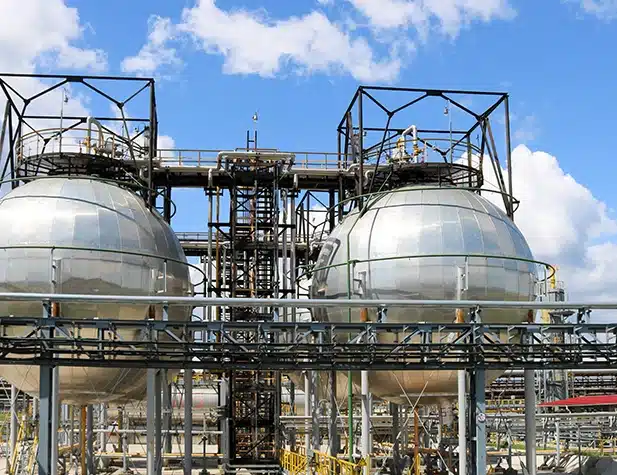
Specialty chemical producers manage high-value intermediates, emulsions, surfactant-heavy formulations, and solvent-rich mixtures that require precise separation. Small changes in feed quality or membrane performance can affect batch consistency, yield, product purity, and downstream recoverability.
These operations often involve aggressive cleaning cycles, variable chemistries, and tight process-control requirements. Producers need separation technologies that maintain stable performance while protecting sensitive products and minimizing material loss.
ALSYS’ Track Record
ALSYS supports specialty chemical workflows with membrane and catalyst technologies proven to withstand exposure to solvents and surfactants, and repeated cleaning.
- Membrane systems used for advanced materials, pigments, oils, and formulated products
- Reliable performance in surfactant-rich and solvent-heavy environments
- Catalytic systems supporting VOC reduction in chemical processing
These solutions help specialty chemical plants achieve more consistent product quality while reducing waste and operational variability.
Related Solutions
Specialty chemical production relies on separation systems designed for solvent handling, surfactant-rich mixtures, and variable particulate loading. The solutions below align with core specialty chemical workflows.
- Ceramic Membranes, Polymeric Ultrafiltration, and Pervaporation
- Catalytic Emissions Systems for VOC control
Related Applications
Midstream operators depend on consistent water quality and controlled emissions to keep pipelines, terminals, and compressor stations running smoothly. These application areas speak directly to the polishing and air-quality needs that shape midstream performance every day.
Technical Resources for Oil & Gas Operations
Tools and reference materials to support separation planning, emissions control, and treatment evaluation.
Answers to Common Oil & Gas Treatment Challenges
Oil and gas operators face complex separation, water-quality, and emissions challenges that shift from upstream to downstream. The questions below highlight where membrane and catalyst technologies make the greatest impact and how ALSYS helps improve reliability, compliance, and overall system performance across the value chain.
Oil and gas facilities routinely encounter fluids containing emulsified oil, surfactants, corrosion inhibitors, fines, and dissolved organics that strain conventional equipment. These variations in feed chemistry can lead to inconsistent treatment performance, higher operating costs, and more frequent maintenance. Membranes provide a controlled separation environment that maintains predictable behavior even when the composition of produced or process water shifts during field or facility operations.
In many cases, the ability to tolerate aggressive cleaning and restore permeability is essential to sustaining long-term performance. Ceramic membranes remain stable under high-pH and oxidizing conditions, while polymeric membranes support polishing steps where finer particulates or emulsions remain. Together, these systems help operators meet discharge criteria, protect downstream equipment, and minimize process disruptions.
- Stable flux with oily or surfactant-rich feeds
- Compatibility with high-frequency chemical cleaning
- Improved solids removal compared to conventional media
- Consistent permeate quality for reinjection or reuse
Downstream environments introduce aggressive solvents, acids, polymeric intermediates, fines, and high-temperature process streams that place significant demands on filtration and emissions-control equipment. Variability in feed quality, batch transitions, and solvent composition can challenge consistency, while regulatory requirements impose strict limits on air emissions from furnaces, boilers, and heaters. Membrane and catalyst technologies must remain stable under these conditions to support reliable operation.
ALSYS provides ceramic and Hybsi membranes designed for chemical resistance, temperature resilience, and repeated exposure to oxidizing or caustic cleaning. Catalysts reduce NOx and VOC emissions while maintaining activity across temperature fluctuations and hydrocarbon-rich exhaust profiles. These technologies help operators protect assets, improve product quality, and maintain compliance without extensive equipment modification.
- Solvent-resistant membranes for purification and dehydration
- High-temperature cleaning compatibility
- Catalysts engineered for refinery heater exhaust
- Systems supporting long-term operational continuity
Produced water contains highly variable combinations of dispersed oil, dissolved organics, surfactants, corrosion inhibitors, solids, and reservoir-derived chemistry. These fluctuations can destabilize gravity separation and create fouling conditions for traditional filtration media. Ceramic membranes address these issues by providing a durable, chemically resistant surface that maintains flux and separation efficiency despite constant changes in water composition.
Their inorganic construction resists swelling, thermal shock, and chemical attack, allowing operators to use stronger cleaning protocols without damaging the membrane. This makes ceramic systems particularly effective for facilities with high fouling loads or frequent upsets, as permeate quality can be maintained through consistent cleaning practices and system controls.
- Resistant to surfactants and oil emulsions
- Capable of high-pH and oxidizing cleaning
- Stable performance across variable feed chemistry
- Suitable for continuous and batch operation
Combustion equipment is used throughout upstream, midstream, and downstream facilities, supporting heating, dehydration, compression, and numerous utility functions. These systems generate NOx and VOC emissions that operators must manage to meet regulatory requirements. The exhaust from this equipment often contains hydrocarbons and particulates that can interfere with catalyst performance if not accounted for in system design.
ALSYS Catalysts are engineered to maintain activity across temperature fluctuations, operational swings, and varying exhaust compositions. They integrate into existing equipment with minimal modification and support consistent emissions reduction over extended operating periods. For operators facing stricter air-quality obligations, catalytic systems offer a predictable and scalable pathway to compliance.
- Applicable to field heaters and dehydration units
- Effective in compressor station combustion
- Compatible with refinery and petrochemical furnaces
- Designed for stable long-term emissions reduction
Explore The Solutions That Best Match Your Separation Or Emissions Challenge
Find the membrane or catalyst technologies that best address your performance targets.